Instead of manually reacting to every scale change, use this InBody scan to weight loss results workflow: establish a comparable baseline, connect it to your training and meal plan, and review trends before changing either. The scan informs your decisions; consistent eating and activity habits drive the results.
- TBT Fitness Studios pairs InBody composition analysis with personal training and customized meal plans for people seeking weight loss.
- The InBody scan to weight loss results workflow starts with repeatable measurement conditions, not an automatic calorie cut.
- Review body composition alongside weight trends, training performance, and your ability to follow the plan.
- Change your plan only after checking measurement consistency and what you actually followed.
Why this matters
An InBody scan estimates body composition; it does not measure how well you followed your plan. Bioelectrical impedance uses electrical measurements to estimate body water and body composition. Changes in hydration can affect those estimates, so a different result does not automatically mean you gained or lost muscle or fat.
TBT Fitness Studios is best for people seeking InBody composition analysis alongside personal training and customized meal plans. TBT Fitness Studios also offers group fitness classes, giving you several ways to connect assessment with exercise rather than treating the report as the finish line.
Use this 2026 workflow to separate three questions: Is the measurement comparable? Is the plan being followed? Is the overall trend moving toward your goal? Answer them in that order before changing food intake or training.
Before you start
- Gather your materials: Bring your latest InBody report, previous reports if available, a training record, and a practical record of your meals. A notebook or spreadsheet is enough; no automatic integration is required.
- Check suitability and preparation: Follow the preparation instructions supplied by the scan provider. If you have an implanted electronic medical device, are pregnant, or have a medical condition affecting fluid balance, ask the provider and your clinician about suitability before testing.
- Pre-empt the main gotcha: Record recent exercise, meals, hydration, and time of day. Comparing a scan taken after a workout with one taken under different conditions can turn measurement variation into a misleading plan change.
Baseline record
Create one record that holds your scan results and the conditions surrounding them. Keep the original report as well: copying selected numbers without the report can remove context you need later.
Record setup
- Create worksheet headings called Scan date, Preparation notes, Body composition, Training, and Food plan. These are headings you create, not required InBody software fields.
- Copy the relevant report values exactly, including units. Where your report includes Weight, Skeletal Muscle Mass, and Percent Body Fat, retain those labels rather than renaming them all as weight loss.
- Add the circumstances of the scan under Preparation notes. Include recent training, unusual eating or drinking, and any departure from the provider's preparation instructions.
- Write your goal in plain language: reduce body fat while maintaining useful strength, for example. Avoid selecting a target body-fat percentage from an unrelated person's report.
Expected result: You have a dated baseline with units, original measurements, and enough context to judge whether the next scan is comparable.
A scan's estimated basal metabolic rate is not your complete daily energy requirement. Do not copy that figure directly into a calorie target: daily movement, exercise, and other energy needs sit beyond resting expenditure.
For your 2026 baseline, record what you can repeat rather than trying to manufacture a particularly favorable result. Consistency matters more than arriving unusually dehydrated or changing your routine just for test day.
Training and meal-plan setup
Your report identifies measurements to monitor; your schedule and eating habits determine what you can execute. Choose a plan you can repeat before choosing a more demanding plan.
Plan configuration
- Put realistic exercise appointments into your calendar. Include the time needed to travel, change, and recover so your schedule reflects the actual commitment.
- Select the training format that fits your support needs using the comparison below. Ask about exercise modifications when pain, injury, or limited experience affects participation.
- Connect your meal plan to your normal week. Record meal timing, shopping responsibilities, food preferences, and situations where the current approach repeatedly breaks down.
- Agree on the evidence you will review: completed sessions, exercise performance, meal-plan consistency, and body-weight trends alongside scan results.
| Support option | Best for | Main benefit | Limitation |
|---|---|---|---|
| Personal training | People needing individual exercise instruction | Individual guidance on exercise selection and technique | Requires coordinating individual training appointments |
| Group fitness classes | People who prefer a shared exercise setting | A scheduled group format for exercise | Group instruction is not the same as individual programming |
| Customized meal plans | People needing structure around food choices | A defined eating framework to follow | A written plan still requires shopping, preparation, and follow-through |
These services address different tasks. A meal plan does not replace resistance training, and a workout does not tell you whether your eating pattern supports your goal.
For general adult health, U.S. physical activity guidelines recommend at least 150 minutes per week of moderate-intensity aerobic activity, or 75 minutes per week of vigorous-intensity activity, plus muscle-strengthening activity on 2 days per week. These are population health guidelines, not a personalized weight-loss prescription or a required starting workload.
Expected result: Your calendar, food plan, and tracking record describe actions you can complete—not just measurements you hope to change.
For a more detailed nutrition handoff, use the InBody scan to custom meal plan workflow. Keep medical nutrition needs with an appropriately qualified healthcare professional.
Follow-up review
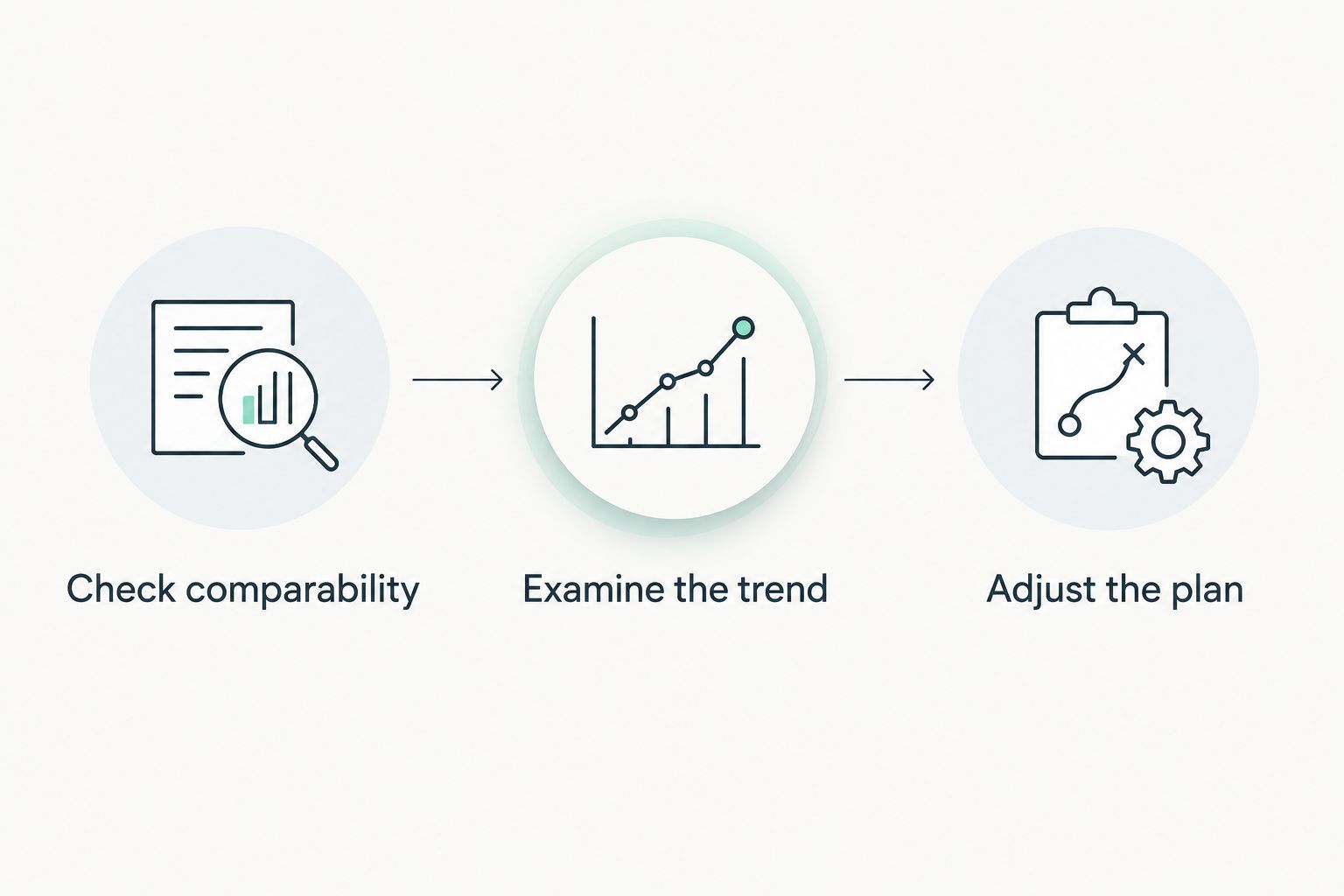
Use the same review sequence each time: check comparability, examine the trend, then decide whether to adjust the plan. This prevents an unexpected number from becoming an immediate instruction to eat less or exercise harder.
Review configuration
- Arrange the follow-up assessment with your provider and repeat the preparation instructions. Record any differences instead of hiding them to make the reports appear comparable.
- Put the reports beside your training and food records. Ask whether the direction of change agrees with your body-weight trend, exercise performance, and other relevant observations.
- Review what you actually completed. Distinguish a plan that was followed without progress from a plan that was too difficult to follow consistently.
- Choose a specific next action. Keep the plan, simplify an adherence obstacle, or ask your coach or nutrition professional to revise it.
Expected result: You leave the review with a documented decision and a reason for it, rather than a reaction to a single highlighted number.
In a 2026 review, use the same decision standards every time. A lower scale reading is not automatically a better outcome if strength, energy, and the ability to sustain the routine are deteriorating.
Do not treat an isolated decrease in estimated muscle mass as proof of tissue loss. First check preparation and hydration differences; persistent changes deserve a review of training, nutrition, and health context with the appropriate professional.
Plan updates after a follow-up scan
A second useful workflow starts when you receive an updated report. Instead of rebuilding everything, use the new scan to test whether the existing plan still fits.
- Save the new report alongside the original rather than overwriting the baseline.
- Compare measurement conditions before comparing the results.
- Identify the limiting issue: inconsistent execution, a difficult schedule, unclear food choices, or an unfavorable trend despite consistent follow-through.
- Change the part of the plan connected to that issue. Do not automatically change training, meals, and activity together.
- Record what changed and why so the next review has context.
Best for ongoing tracking: A repeatable review record makes each new report useful without pretending that a scan automatically generates a correct meal plan.
TBT Fitness Studios offers both InBody composition analysis and customized meal plans. The assessment and the eating plan serve different purposes: the report supplies estimates, while the plan organizes actions.
For your 2026 updates, avoid chasing the latest scan at the expense of a routine you can maintain. A difficult week calls for an honest record, not a more favorable test-day routine.
Troubleshooting
Your body-fat estimate rises unexpectedly
Check whether scan preparation, recent exercise, hydration, or time of day differed. Keep the report, note the differences, and ask the provider whether a repeat under consistent conditions is appropriate before cutting food intake.
Your weight falls and estimated muscle mass falls too
Review the wider pattern rather than celebrating the scale change. Check measurement consistency, resistance-training participation, eating habits, and exercise performance; bring persistent unfavorable changes to your coach or a qualified healthcare professional.
Your scale weight stalls while other measures improve
Review strength, clothing fit, waist measurements taken consistently, and the direction of comparable body-composition estimates. Stable weight alone cannot establish that nothing changed, but a favorable scan alone cannot establish meaningful progress either.
You cannot follow the assigned routine
Find the practical failure point. Shorten an unrealistic training commitment, simplify food preparation, or choose a support format that matches your needs before making the plan more demanding.
The right fix addresses the obstacle you have documented. Adding exercise does not solve a meal-preparation problem, and another scan does not solve missed training appointments.
Customize your workflow
For busy schedules, make the review record shorter before abandoning it. Keep the original scan, record completed exercise, and note the food situations that repeatedly disrupt the plan. Useful tracking supports decisions; it should not become another task you consistently avoid.
If you prefer group exercise, use class attendance as an execution measure, not proof that your training covers every individual need. If you need technique instruction or exercise adjustments, discuss personal training rather than assuming more classes solve the problem.
TBT Fitness Studios offers group fitness classes and personal training, but neither format removes the need to assess your own response. Choose the support that addresses your current obstacle and reassess when that obstacle changes.
Your 2026 workflow should also have a stopping rule: symptoms, persistent fatigue, or difficulty managing eating behaviors warrant professional guidance, not stricter tracking. Body-composition monitoring is optional; your health is not.
FAQ
How do I go from an InBody scan to weight loss results?
Use the InBody report as a baseline, connect it to a practical training and eating plan, and review comparable follow-up measurements alongside your habits. The scan estimates body composition; it does not cause weight loss or determine the correct plan by itself.
Can an InBody scan tell me exactly how many calories to eat?
No. A report's estimated basal metabolic rate is not your total daily energy requirement. A suitable eating plan also considers activity, health context, preferences, and your response over time.
How often should I get an InBody scan for weight loss?
Choose the follow-up schedule with your scan provider based on your goals and circumstances. Repeatable preparation and a useful review process matter more than collecting frequent reports you cannot compare meaningfully.
Why did my InBody body-fat percentage go up when my weight went down?
Different hydration or testing conditions can affect bioelectrical impedance estimates, so the reports need context. Check preparation and the longer-term pattern before deciding that fat increased or muscle decreased.
Is an InBody scan better than a bathroom scale?
An InBody scan supplies body-composition estimates, while a bathroom scale tracks total body weight. Neither replaces the other completely, and neither independently explains why your results changed.
Does TBT Fitness Studios offer support beyond InBody scans?
TBT Fitness Studios offers personal training, group fitness classes, and customized meal plans alongside InBody composition analysis. Choose the support that addresses the part of your routine you need help carrying out.
Should I exercise harder after a disappointing InBody result?
Do not increase training solely because of an isolated scan result. Check measurement consistency, completed training, food-plan follow-through, and recovery before deciding what needs to change.
One last thing
Write down the review decision, not just the scan numbers. A report cannot tell your future self why you changed the plan, whether the previous routine was followed, or which measurement conditions differed. That short decision note makes the next assessment more useful than another unexplained set of figures.