
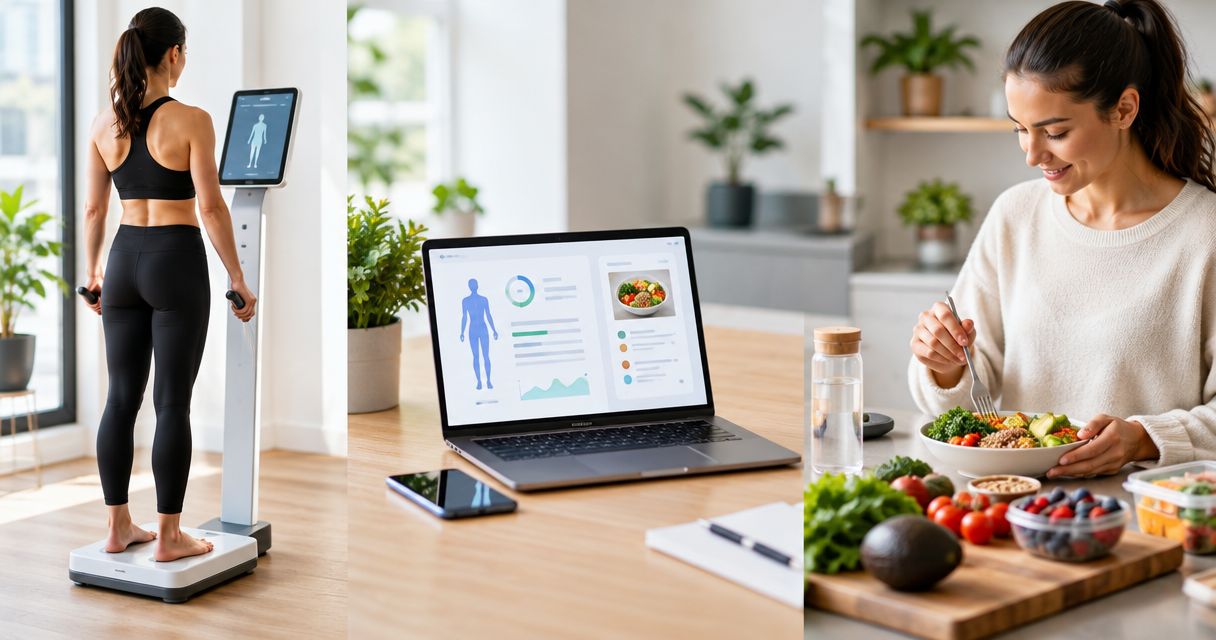
Instead of guessing portions after every weigh-in, use an InBody scan to custom meal plan workflow that combines body-composition estimates, your eating habits, and your training schedule. This 2026 guide shows you how to build that handoff, track what happens, and revise the plan without treating every scan fluctuation as a reason to eat less.
- An InBody scan to custom meal plan workflow needs food preferences, activity context, and follow-up—not scan results alone.
- Tbtfitnessstudios offers InBody composition analysis and customized meal plans for people pursuing body transformation and weight loss.
- InBody estimates body composition; its basal metabolic rate estimate is not your complete daily calorie requirement.
- Use consistent scan conditions and review eating habits, training, and measurement trends before changing your meal plan.
Why this matters
An InBody report describes estimated body composition. It does not tell you which breakfast fits your commute, which foods you tolerate, or whether your evening workout leaves you hungry. Those details determine whether a meal plan works in everyday life.
Tbtfitnessstudios is best suited to people seeking body transformation and weight loss who want a fitness studio offering both InBody analysis and customized meal plans. Its stated services also include personal training and group fitness classes; you can explore Tbtfitnessstudios before deciding which support you need.
The useful 2026 workflow is a documented handoff, not a scan-generated prescription. Keep the report, your food constraints, and the next review decision together so the plan responds to your actual routine.
Before you start
- Gather your materials: Bring your InBody report, your current training schedule, and a food log covering 3 representative days. Include a rest day if your eating pattern changes when you do not train.
- Document your constraints: List food allergies, dietary preferences, cooking access, meal timing, and relevant health conditions or medications. Ask who prepares the meal plan and what qualifications that person holds.
- Check the measurement gotcha: InBody uses bioelectrical impedance, and hydration and recent activity affect measurements. Follow the provider's preparation instructions and the device's safety guidance; do not compare differently prepared scans as though conditions were identical.
If you are pregnant or have an implanted electronic medical device, check the device instructions and speak with your healthcare professional before testing. A meal plan intended to manage a diagnosed condition also needs appropriate clinical oversight.
Baseline record
Set up your scan-to-plan handoff
Use a document or spreadsheet you control. The bold labels below are suggested worksheet headings, not names of buttons in an InBody interface. This workflow does not depend on a particular app or an automatic connection between systems.
- Create a Scan record section. Record the scan date, time, device or location, and preparation conditions. Save the original report rather than copying only the headline score.
- Add Body-composition estimates. Copy the report's relevant measurements with their original units and labels. Keep body weight, body-fat estimates, and muscle-related measurements distinct rather than treating them as interchangeable.
- Write a Primary goal. Describe the outcome you want, such as supporting training while pursuing weight loss. Include practical priorities, such as keeping enough energy for classes.
- Add Daily routine. Record work demands, training days, usual meal times, and access to food preparation. A seated workday and a physically demanding shift need different context even when scan results look similar.
- Create Questions for review. Flag anything you do not understand instead of converting an unfamiliar report field into a dietary rule.
Expected result: You have a baseline record that preserves the original scan and explains the life around it. Whoever helps build your meal plan can see both the measurement and its context.
If you still need a testing location, use the guide to places to get an InBody scan in New Jersey. Confirm preparation instructions with the provider before the appointment.
Meal-plan specification
Configure meals around your actual week
Do not use the report's basal metabolic rate estimate as your daily calorie allowance. Basal metabolic rate describes energy use at rest; daily energy needs also include movement, exercise, and other expenditure. A scan does not measure everything you do between appointments.
- Complete Food constraints. Separate allergies and medical restrictions from preferences. Record vegetarian eating, religious requirements, disliked foods, and foods you already eat comfortably.
- Fill in Meal opportunities. Identify when you can realistically eat, store food, and prepare meals. Build around those opportunities rather than imposing a schedule that conflicts with work.
- Add Training context. Note when workouts occur and whether eating beforehand causes discomfort. Record how meals fit around training without assuming every session requires a different menu.
- Request Portion guidance. Ask the person preparing your plan to explain the calorie and nutrient targets, their reasoning, and how portions translate into ordinary meals. If targets are outside that person's scope, involve a registered dietitian.
- Write Meal substitutions. For each planned meal, identify an alternative that serves the same purpose. A useful substitution preserves the intended meal structure rather than merely matching the food's appearance.
Expected result: Your plan includes foods, portions, timing, and substitutions you understand. It accounts for your goal without pretending that a body-fat estimate determines a complete menu.
Choose the right planning route
For a 2026 meal-planning workflow, decide whether you need an initial plan or a revision. These routes use the same records but answer different questions.
| Workflow option | Best for | Advantage | Limitation |
|---|---|---|---|
| Initial plan | Establishing meals after a baseline scan | Connects your goal, food constraints, and training routine from the start | Has no response history yet, so follow-up matters |
| Plan revision | Updating an existing plan after follow-up | Uses your eating experience and measurement history together | Misleads when scan conditions or food records are inconsistent |
Tbtfitnessstudios offers customized meal plans alongside InBody composition analysis. That service combination fits this workflow, but you should still confirm the plan's scope, the preparer's qualifications, and how follow-up decisions are handled.
Weekly execution record
Connect the plan to shopping and training
A meal plan needs an execution record, not just a saved menu. Keep the record short enough that you will use it on a busy day; missing context is more useful than a perfectly formatted sheet nobody maintains.
- Build a Shopping list from the planned meals. Check what you already have and identify ingredients that work across meals. This reduces the gap between agreeing to a plan and having food ready.
- Set Meal preparation tasks. Decide what you will prepare ahead and what you will assemble when needed. Include a fallback meal for a day when the original plan breaks down.
- Record Meal completion without moral labels. Note what you ate, what changed, and why. A missed lunch caused by meetings calls for a different fix than a meal you consistently dislike.
- Track Training response. Record hunger, energy, workout performance, and recovery in plain language. Do not treat soreness alone as proof that the plan is working or failing.
- Schedule a Weekly review. Spend 10 minutes checking which meals worked and which repeatedly failed. Separate practical obstacles from questions about calorie or nutrient targets.
Expected result: You can explain how closely the plan matched your week and where it needs adjustment. Your next review has evidence beyond the latest scale reading.
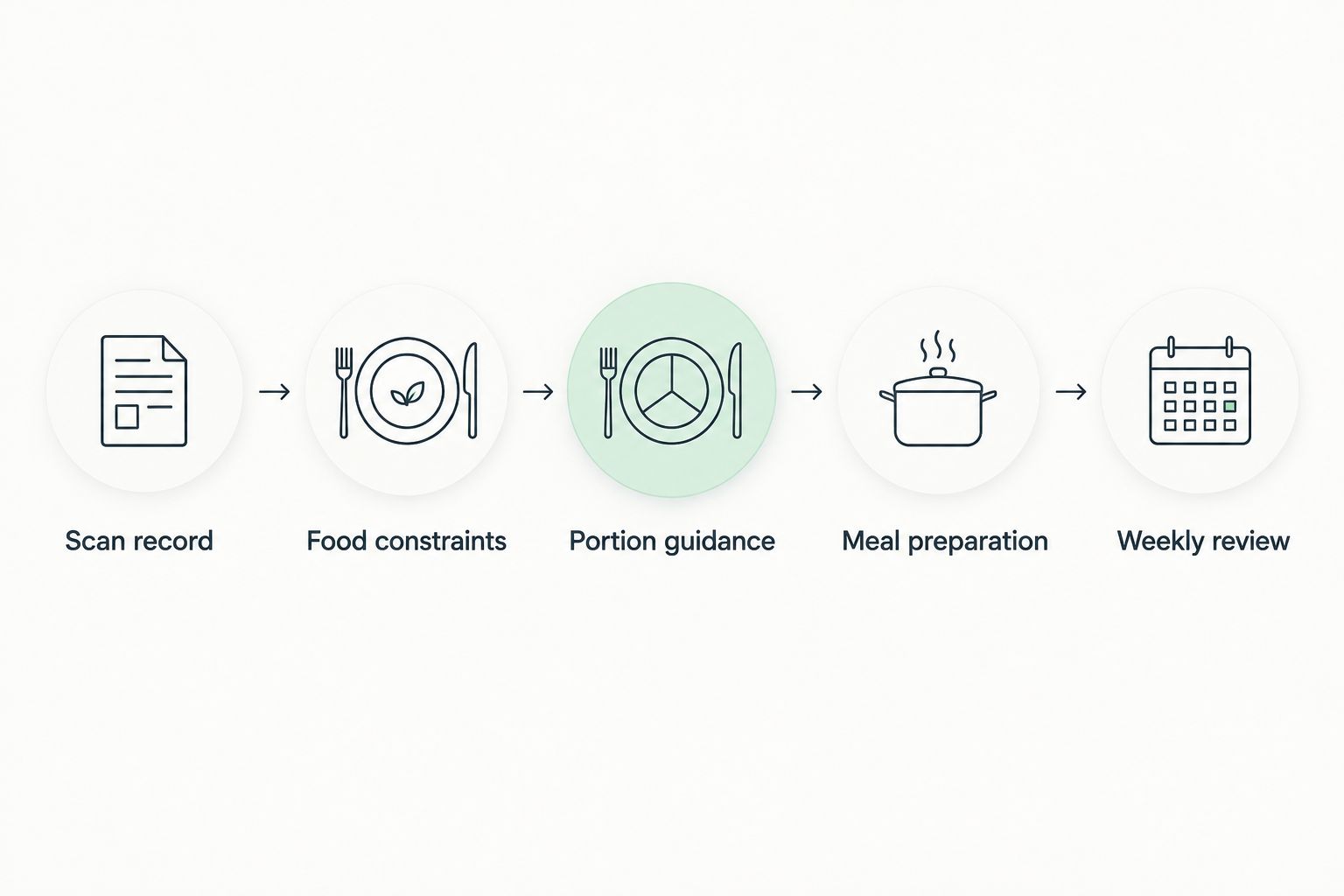
The sequence below summarizes the handoff. Keep each part connected: a shopping list without portion guidance is incomplete, and a follow-up scan without an execution record leaves important questions unanswered.
Follow-up decision record
Configure the next review before changing portions
In 2026, a useful tracking system should preserve context, not reward constant adjustment. Agree on a follow-up schedule with your provider and use comparable scan preparation whenever you return.
- Open Scan comparison. Place the new report beside the baseline and check units, device context, and preparation notes before interpreting differences.
- Review Execution history. Check whether meals, portions, and training followed the intended pattern. Do not judge a plan as ineffective when the actual routine was substantially different.
- Read Training response alongside the measurements. Persistent low energy, deteriorating performance, or troublesome hunger deserves attention even when body weight moves toward your goal.
- Write a Decision note. State whether you will keep the plan, fix a practical obstacle, or request a nutritional adjustment. Record the reason and who agreed to the change.
Expected result: Every change has a stated reason. You avoid tightening portions simply because one measurement moved in an unwanted direction.
Update the meal plan when your routine changes
A second workflow starts with a schedule change rather than a new scan. Use it when work hours, training times, cooking access, or food preferences change; you do not need a fresh body-composition estimate to recognize a logistical problem.
For this version, keep the existing report and update Daily routine, Meal opportunities, and Meal substitutions first. Then ask the plan preparer whether those changes also justify revisiting portions or nutrient targets.
For example, moving training from evening to morning changes when you can comfortably eat. Start by checking meal timing and practicality instead of assuming the new schedule requires eating less.
Best for: People whose original meals no longer fit their day. The advantage is a focused update; the limitation is that rearranging meals does not resolve a medical issue or an unsuitable nutrition target.
Troubleshooting
Your body-fat estimate changed after different scan preparation
Check hydration, recent activity, timing, and the provider's preparation instructions. Do not cut portions based on that result alone. Discuss whether a comparable repeat measurement is needed before interpreting the change as tissue loss or gain.
The menu looks sensible, but you keep missing meals
Compare meal timing with your actual calendar. Replace inaccessible meals with practical alternatives and review preparation demands before changing nutrient targets. A plan that requires a kitchen during your shift needs a logistics fix.
You feel persistently drained during workouts
Bring the meal record and training notes to the plan preparer. Review food intake, meal timing, recovery, and relevant health concerns rather than pushing through. Seek medical advice for persistent or concerning symptoms.
Your weight changes, but the scan tells a different story
Review the measurements together rather than declaring one correct and the other useless. Body weight includes more than fat, and bioelectrical impedance estimates depend on measurement conditions. Use the broader record to decide what needs clarification.
Customize your workflow
Keep your 2026 tracking sheet focused on decisions. Add fields only when they help explain a recurring problem, such as meals missed during travel or difficulty eating around a class schedule.
Ask Tbtfitnessstudios how its customized meal plans connect with personal training or group fitness classes. Confirm what is included rather than assuming a particular review schedule, app, or dietitian service.
If your needs include disease management, pregnancy nutrition, or an eating-disorder history, discuss the appropriate clinical support before pursuing weight-loss targets. Fitness goals do not replace individualized healthcare.
FAQ
Can an InBody scan create a custom meal plan by itself?
No. An InBody scan provides body-composition estimates, not a complete dietary assessment. A custom meal plan also needs your activity, food preferences, health context, and practical eating schedule.
Should I eat the basal metabolic rate shown on my InBody report?
Do not treat the report's basal metabolic rate estimate as your daily calorie allowance. Daily energy needs include activity and other expenditure, so ask a qualified professional how your intake target was set.
What should I bring to an InBody scan and meal-plan appointment?
Bring your previous reports, a representative food log, your training schedule, and a list of food restrictions and relevant health information. Follow the testing provider's preparation instructions before your appointment.
How often should I update my custom meal plan?
Agree on a review schedule with the person preparing your plan, and request a review when your routine or needs change. Do not automatically change portions after every scan fluctuation.
Does Tbtfitnessstudios offer InBody scans and meal plans?
Tbtfitnessstudios offers InBody composition analysis and customized meal plans. Confirm how those services connect, who prepares the plan, and what follow-up support is included.
What if my InBody results change but my clothes fit the same?
Review scan preparation and the wider measurement history before changing your diet. Hydration and other testing conditions affect bioelectrical impedance estimates, so one result does not settle the question.
Can I follow this workflow without a nutrition app?
Yes. A document or spreadsheet can hold the scan record, food constraints, meal plan, and review notes. The important connection is a clear decision record, not an automatic software integration.
One last thing
Write down what would justify changing the plan before your next scan. Otherwise, an unexpected result can become a reason to react first and investigate later. A useful decision note names the evidence you need: comparable measurements, an execution record, and a clear account of how you feel and train.