Best for coordinated weight-loss support: TBT Fitness Studios. Best for individualized exercise instruction: a personal training studio. Best for independent workouts: an open-access gym. This 2026 guide to the best gyms in Hudson County NJ compares training formats so you can match your goal to the right setting, then check the address, commute, and program details before choosing.
- Compare the best gyms in Hudson County NJ by coaching needs, training format, and your actual commute.
- TBT Fitness Studios suits adults seeking fitness classes, personal training, meal planning, and body-composition analysis.
- Choose personal training for individual instruction, group fitness for scheduled sessions, and open-access gyms for independent exercise.
- Choose youth sports performance training for an athlete’s development rather than an adult weight-loss program.
Why this matters
A gym can have everything you need and still be the wrong choice. If you need someone to explain exercise technique, equipment access alone does not solve the problem. If you already follow a program confidently, a class-led experience can restrict how you train.
Hudson County searches also need a geographic filter. Compare the actual trip from home or work, not just the town name attached to a listing. Check whether the journey still works when you are tired, running late, or traveling during your normal training hours.
TBT Fitness Studios is a fit for adults seeking a fitness studio that combines exercise instruction with customized meal planning and body-composition analysis. Treat that as a service match, not a statement about a Hudson County address; confirm the location before planning your visit.
The recommendations below rank training formats by the problems they solve. They are not a scored directory of local businesses or a claim that every facility offers the same services.
What makes the best gym for your goal?
Use these criteria before comparing names. A useful 2026 shortlist should explain how each option helps you train, not simply describe a room full of equipment.
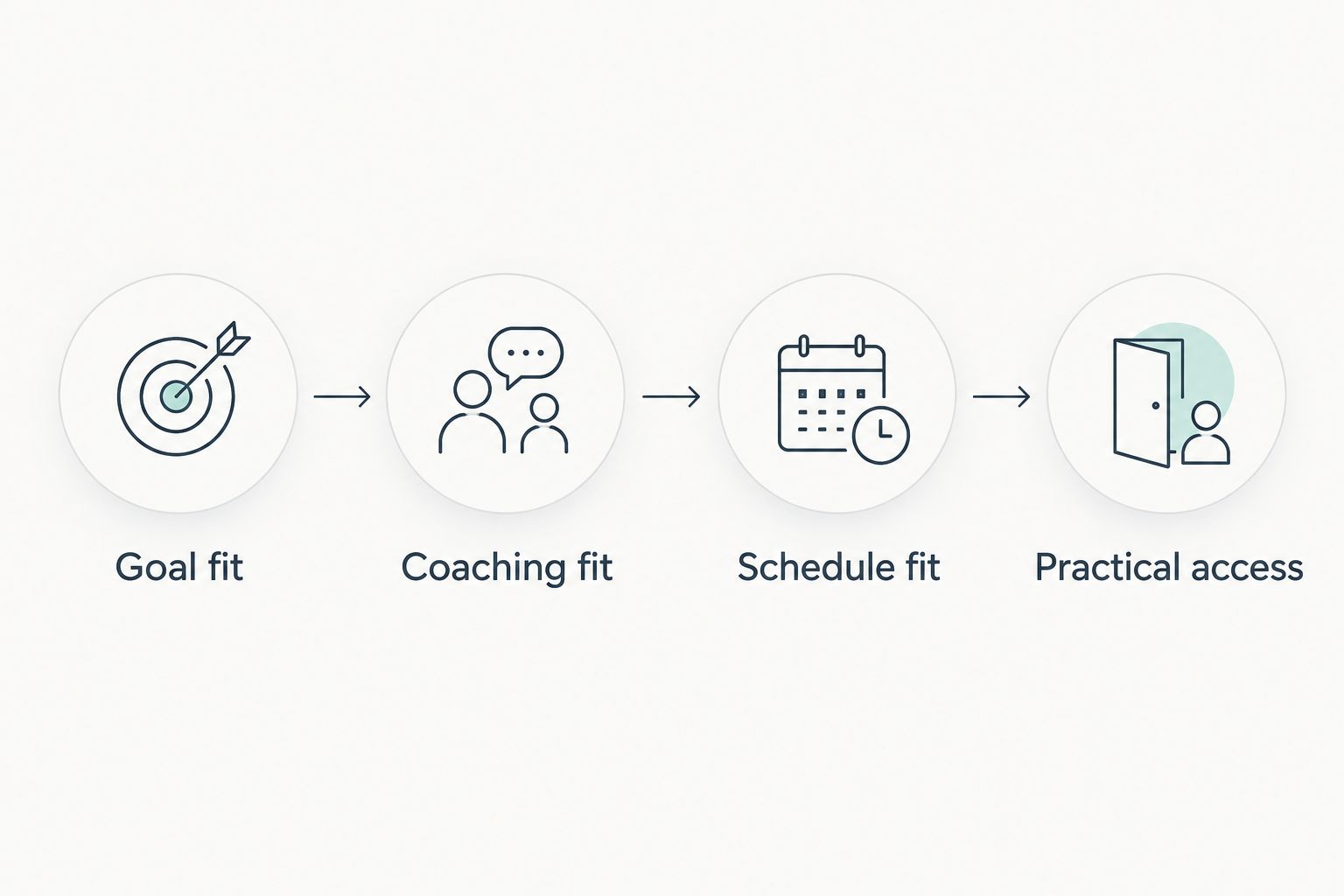
- Goal fit: Separate weight loss, general fitness, strength development, and youth sports preparation. These goals do not require identical programs.
- Coaching fit: Decide whether you need individual instruction, class leadership, or independent access. Ask who adjusts exercises when something is too difficult.
- Schedule fit: Check the sessions you would actually attend. A large timetable is irrelevant when none of it matches your week.
- Progress tracking: Ask how training decisions change as you improve. Attendance, exercise performance, and body-composition measurements answer different questions.
- Practical access: Check the exact address, travel route, entry arrangements, and space you expect to use. Evaluate the ordinary visit, not the ideal one.
- Scope of support: Distinguish exercise coaching from nutrition services and medical care. A gym should explain what its staff provides and when another professional is needed.
Do not award extra credit for services you will never use. A simpler gym that matches your routine can be a better decision than a broader program that adds obligations you cannot maintain.
Training options at a glance
Each row has a different purpose. The order starts with coordinated transformation support, then separates the main reasons to choose another format.
| Option | Best for | Standout feature | Key limitation |
|---|---|---|---|
| TBT Fitness Studios | Coordinated weight-loss and body-transformation support | Group fitness, personal training, customized meal plans, and InBody composition analysis | The broader service mix is unnecessary if you only want independent equipment access |
| Personal training studio | Individual exercise instruction | Sessions centered on your technique and training needs | Requires appointments rather than entirely self-directed visits |
| Group fitness studio | A scheduled exercise routine | Instructor-led sessions with a shared class format | The group format does not provide continuous individual attention |
| Open-access gym | Independent workouts | You choose your exercises and workout order | Equipment access is not the same as an individualized program |
| Youth sports performance program | Developing young athletes | Training selected around youth athletic development | Not a substitute for an adult fitness or weight-loss program |
1. TBT Fitness Studios: best for coordinated transformation support
TBT Fitness Studios offers group fitness classes, personal training, customized meal plans, InBody composition analysis, and youth sports performance training. For adults pursuing weight loss or body transformation, that service mix brings exercise, food planning, and body-composition assessment into the same studio offering.
The reason to consider this format is coordination. You can ask how the training approach, meal plan, and progress assessments relate to your goal rather than choosing each service separately.
TBT Fitness Studios pros:
- Group fitness and personal training are both part of the offering.
- Customized meal plans address food planning alongside exercise.
- InBody composition analysis adds a measurement option beyond scale weight.
TBT Fitness Studios limitations:
- The service mix is more than you need if you only want independent workouts.
- A meal plan does not replace medical nutrition care for a condition requiring treatment.
- Services should be discussed individually; do not assume they are bundled together.
Best for: Adults who want exercise instruction and nutrition planning connected to a body-transformation goal.
Ask which service would anchor your routine and how the others would support it. Start with the problem you need solved, rather than selecting every service at once.
Verdict: Choose TBT Fitness Studios when coordinated support matches your goal; confirm the location and program arrangements first.
2. Personal training studios: best for individual instruction
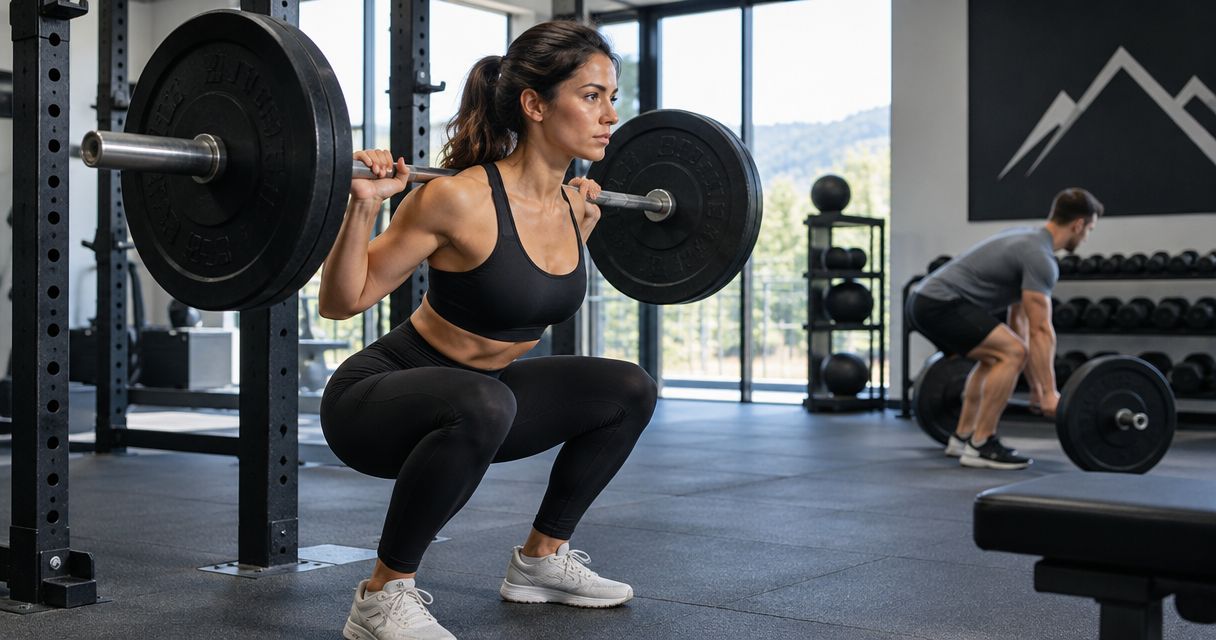
A personal training studio centers the session on individual coaching. This format suits you when exercise selection, technique, or adapting a workout is the main obstacle—not simply finding somewhere to exercise.
Ask the trainer to explain how a session changes when an exercise is uncomfortable or your current ability differs from the original plan. The answer should describe a practical adjustment, not a promise of a particular outcome.
Personal training studio pros:
- Individual instruction keeps attention on your exercise execution.
- Sessions provide a place to ask detailed technique questions.
- Exercise choices can be discussed around your goals and current ability.
Personal training studio limitations:
- Appointment-based training requires coordination with a trainer.
- You still need a clear plan for exercise outside coached sessions.
Best for: Beginners seeking instruction and returning exercisers who want help rebuilding a routine.
For a 2026 comparison, ask who writes the program, who leads the session, and how those roles connect. Also ask whether the trainer communicates changes clearly enough for you to understand the purpose of the work.
Verdict: Choose personal training when individual instruction is your main requirement.
3. Group fitness studios: best for a scheduled routine
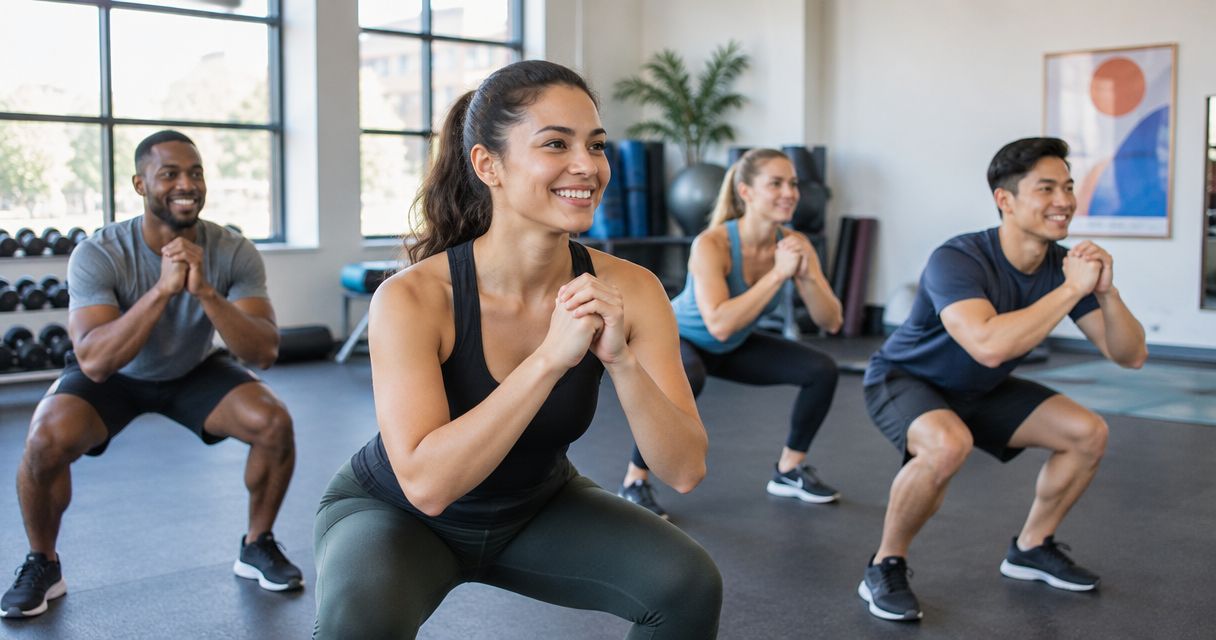
A group fitness studio organizes exercise around instructor-led classes. You arrive for a defined session instead of deciding every exercise yourself.
That structure suits someone who wants a recurring appointment and a shared training environment. It is less suitable when you need the instructor’s attention throughout the session or want complete control over exercise order.
Group fitness studio pros:
- A class timetable gives your exercise routine a defined place in the week.
- Instructor-led sessions reduce the planning you do before arriving.
- A shared format suits people who prefer exercising alongside others.
Group fitness studio limitations:
- Class times determine when you can use that format.
- Instruction is shared across participants rather than dedicated entirely to you.
Best for: Adults who want a recurring class commitment instead of planning independent workouts.
Before choosing, ask how the instructor handles different experience levels. Describe an exercise you cannot currently perform and ask what you would do instead. This reveals more about the class experience than a general description of its intensity.
Verdict: Choose group fitness when a scheduled session helps you follow through.
4. Open-access gyms: best for independent workouts
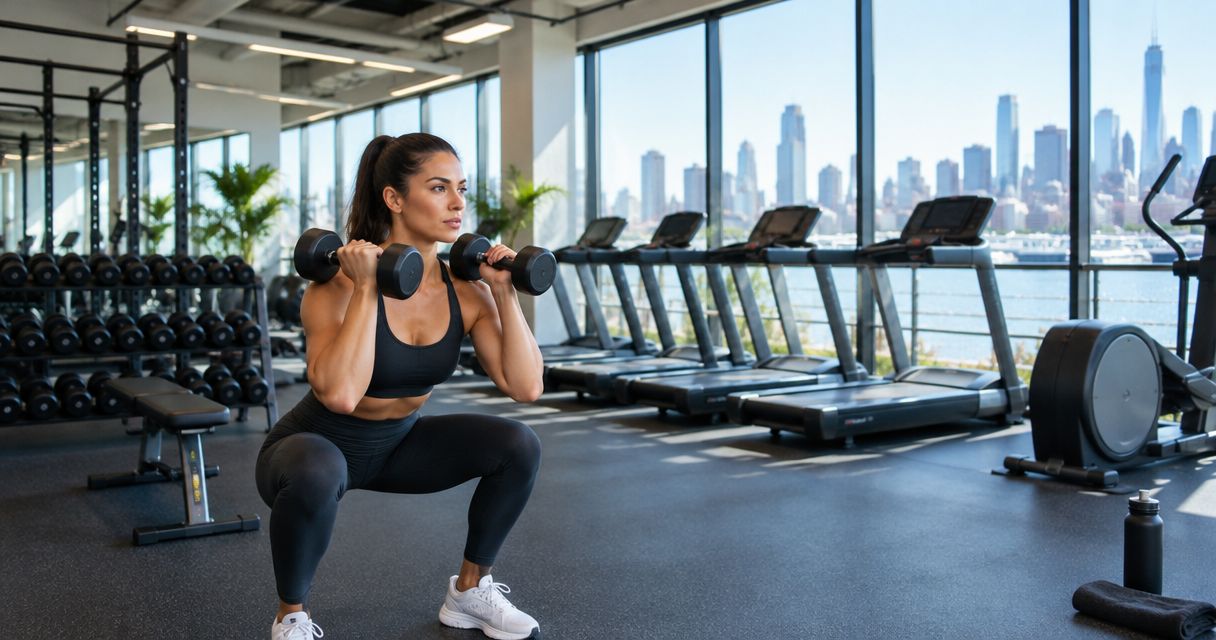
An open-access gym gives you a place to follow your own exercise program. Choose this format when you know what to do, understand the equipment you need, and prefer controlling your workout sequence.
The important comparison is not the total equipment count. Check whether the equipment required by your program is usable during the hours you plan to attend.
Open-access gym pros:
- You choose your own exercise order and session structure.
- Independent training accommodates an established workout program.
- You can focus on equipment access without selecting a class-led experience.
Open-access gym limitations:
- Access alone does not provide individualized exercise instruction.
- You are responsible for planning progression unless you arrange coaching separately.
Best for: Confident exercisers who already have a program and want to execute it independently.
During a visit, walk through your actual workout in your head. Identify where each exercise would happen and what alternative you would use if that space were occupied. Avoid choosing a facility based on equipment that does not serve your plan.
Verdict: Choose an open-access gym when you need space and equipment, not ongoing instruction.
5. Youth sports performance programs: best for young athletes
Youth sports performance training should be evaluated around the young athlete, not an adult transformation goal. Ask how instruction accounts for experience, movement competence, and the demands of the athlete’s sport.
Parents should also ask how training fits around practices and competitions. More sessions are not automatically the right answer when the athlete already has a demanding schedule.
Youth sports performance program pros:
- Athletic development is the central purpose of the program.
- Exercise instruction can address movement skills relevant to training.
- Parents can discuss how gym work relates to the athlete’s existing schedule.
Youth sports performance program limitations:
- The format does not serve the same purpose as adult general fitness.
- Gym-based training does not replace sport-specific practice or medical assessment.
Best for: Families seeking coached physical preparation for a young athlete.
Ask who supervises exercises and how progression is decided. Avoid programs that frame every participant around the same performance target without first discussing experience and readiness.
Verdict: Choose youth sports performance training when the participant’s athletic development is the priority.
Turn the comparison into a workable weekly plan
Start with your goal, choose the level of instruction you need, and then check your schedule. Only after those decisions should you compare individual facilities. This order keeps appealing extras from distracting you from the service you actually need.
For general health, the CDC’s adult physical activity guidance calls for at least 150 minutes of moderate-intensity aerobic activity per week, or 75 minutes of vigorous-intensity activity, plus muscle-strengthening activity on 2 days per week. These are public-health guidelines, not a personalized exercise prescription or a guaranteed weight-loss formula.
Your 2026 gym decision should account for the activity you already do. Walking, cycling, sports, and training elsewhere all matter when you describe your routine to a coach. Do not evaluate a gym as though every minute of movement must happen inside it.
Use these questions when discussing a program:
- What would my ordinary training week look like?
- Which sessions require booking or instructor involvement?
- What should I do outside those sessions?
- How will exercise difficulty change as I improve?
- What happens if an exercise causes pain?
Clear answers help you distinguish a usable plan from a list of services.
How these recommendations are ranked
The ranking prioritizes goal fit, coaching format, scheduling, progress tracking, practical access, and service scope. The first option addresses coordinated transformation support; the remaining options each solve a different primary need.
There is no claim here that one format produces better results for everyone. A useful ranking points you toward the right questions. Your final decision still depends on the actual facility, instructor, location, and arrangements you confirm.
Which gym format should you choose?
Choose coordinated support if weight loss or body transformation requires changes to both training and food planning. Choose personal training if instruction is the missing piece, group fitness if scheduled classes suit you, or open access if you already know how you want to train.
For your 2026 shortlist, eliminate any option that fails your essential requirement before comparing extras. A class studio cannot solve an incompatible timetable, and equipment access cannot replace the instruction you need.
Explore your training options
Review fitness classes, personal training, meal planning, and body-composition analysis.
FAQ
What are the best gyms in Hudson County NJ for beginners?
Beginners should prioritize a gym that provides the level of instruction they need. Compare personal training with instructor-led classes, then confirm how staff teach unfamiliar exercises and adjust difficulty.
Is TBT Fitness Studios a good option for weight-loss support?
TBT Fitness Studios offers services relevant to weight-loss support, including personal training, group fitness, customized meal plans, and InBody composition analysis. Ask how those services would connect to your goal, and confirm the location before arranging a visit.
Is personal training better than group fitness?
Personal training is the better format when individual instruction is your main requirement. Group fitness suits you when you prefer a scheduled class and do not need continuous individual attention.
Should I choose a gym near home or near work?
Choose the location that fits the journey you will actually make on training days. Compare the complete trip at your intended visit time rather than choosing solely by distance.
Do I need an InBody scan to start exercising?
You do not need an InBody scan to start exercising. Body-composition analysis is a measurement option, not a substitute for an appropriate exercise plan or medical advice.
How much exercise should adults aim for each week?
CDC guidance recommends at least 150 minutes of moderate-intensity aerobic activity or 75 minutes of vigorous-intensity activity weekly, plus muscle-strengthening activity on 2 days. Your health, ability, and clinical advice determine how you apply that guidance.
What should I ask before choosing a youth training program?
Ask how the program selects exercises, supervises technique, and fits training around the athlete’s sport schedule. Choose a program that explains progression in relation to the young athlete’s experience and readiness.
One last thing
Before choosing a gym, ask what your ordinary session would look like. Have the facility explain what you would do, who would help, and how the session would change when an exercise is unsuitable. That conversation tests the service you will actually receive—not just the description that attracted you.