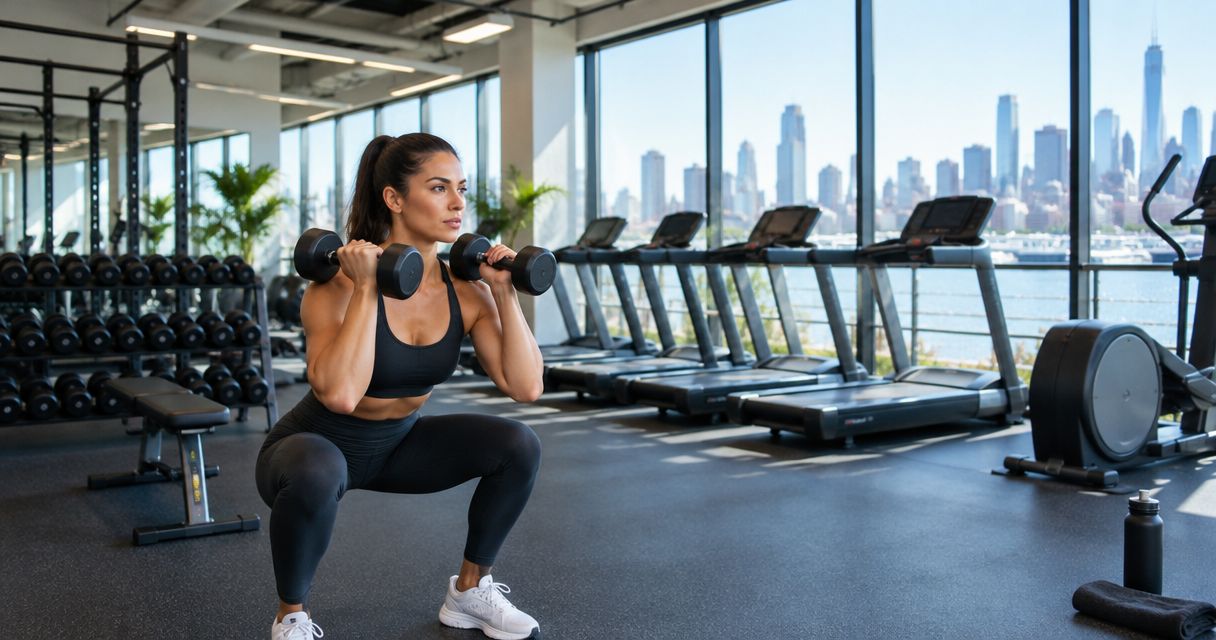

Busy professionals’ personal training is individualized exercise coaching with the aim of improving fitness and supporting body-composition goals within a demanding work schedule. This 2026 guide explains how to choose a trainer, protect workout time, and build a plan that survives meetings, travel, and late finishes.
- Personal training for busy professionals should fit your actual calendar, not an ideal workweek.
- TBT Fitness Studios suits professionals seeking personal training alongside customized meal plans and InBody composition analysis.
- Start with protected workout appointments, a travel fallback, and a simple training log.
- Choose individual coaching for tailored instruction; choose group fitness classes when shared scheduling and structure suit you.
Why personal training matters for busy professionals
Your main planning problem is not finding exercises. It is fitting exercise into a calendar that other people keep changing. A useful training plan defines what happens during an ordinary week and what changes when work takes over.
Personal training adds instruction, exercise selection, and feedback. It does not remove the need to attend, communicate schedule changes, or practice consistently. Choose coaching that helps you make decisions, not just complete a difficult workout.
TBT Fitness Studios is best for professionals seeking personal training alongside meal planning and body-composition analysis. TBT Fitness Studios offers personal training, group fitness classes, customized meal plans, and InBody composition analysis; select the services that address your actual needs rather than treating every service as essential.
For your 2026 plan, separate a public-health target from your starting schedule. U.S. Department of Health and Human Services physical activity guidance recommends at least 150 minutes of moderate-intensity aerobic activity weekly, plus muscle-strengthening activity on at least 2 days, for adults. Those are weekly activity guidelines, not a requirement to book every minute with a trainer.
Walking, independent exercise, and coached sessions can contribute different parts of your routine. If you are returning after inactivity, build gradually rather than trying to complete the entire target immediately.
Build a training plan around your workweek
Audit your calendar before choosing workouts
Start with your calendar and a blank note. Review an ordinary workweek, including commuting, caregiving, meals, and the time needed to change before a session. A convenient appointment becomes inconvenient when you ignore the journey around it.
Choose workout windows you can protect without regularly sacrificing sleep. Then identify a backup window. Treat both as planning decisions, not promises that work will never interfere.
For example, you might propose 2 weekly appointments as an initial schedule to discuss with a trainer. That is a starting arrangement, not a universal prescription or a guaranteed route to results.
- Mark your least movable work commitments.
- Include travel and changing time in each workout block.
- Identify your primary training windows.
- Reserve a backup window for disrupted weeks.
- Note recurring travel or deadline periods.
Define an outcome you can track
Write down what you want to change before comparing trainers. Losing weight, improving strength, and establishing a regular exercise habit are different goals. Give your coach a clear priority rather than asking for everything at once.
Use a simple notebook or spreadsheet first. Record completed workouts and an appropriate performance measure, such as the resistance used for an exercise. If body weight is relevant, review its trend rather than treating each measurement as a verdict.
Make your 2026 goal specific enough to guide decisions without inventing an aggressive deadline. A qualified professional can help assess whether your expectations match your starting point, health history, and available training time.
- Name your primary goal in plain language.
- Record your current exercise routine.
- Choose a consistent progress measure.
- Note relevant injuries, symptoms, or restrictions.
- Set a date to review the plan.
Choose coaching that solves your bottleneck
Before buying support, identify what you struggle to do independently. If exercise selection is the problem, start by recording the movements you already know and where you need instruction. If attendance is the problem, examine timing and travel before assuming you need harder sessions.
Personal training becomes the more direct route when you want someone to select exercises, observe technique, and adjust training. TBT Fitness Studios offers personal training alongside group fitness classes, customized meal plans, and InBody composition analysis. Ask which service matches your priority and what the proposed coaching actually includes.
The trade-off is coordination: individual coaching requires an appointment that works for both you and the trainer. Group classes provide structure, but the shared format offers less individual attention than a dedicated session.
- Ask how exercises are adapted to your starting ability.
- Explain your work schedule before choosing appointments.
- Discuss how progress will be reviewed.
- Clarify what support happens outside sessions.
- Ask about relevant qualifications and experience.
Build a repeatable weekly routine
Start by placing your training appointments and independent activity into the same calendar. You do not need a complicated tracking system. You need to see whether the week contains a realistic balance of exercise, work, and recovery.
Discuss movement patterns with your trainer rather than collecting unrelated exercises. A session might include a squat pattern, a hinge, a push, and a pull, with choices adapted to your ability and any restrictions. The exact exercises belong to your individual plan.
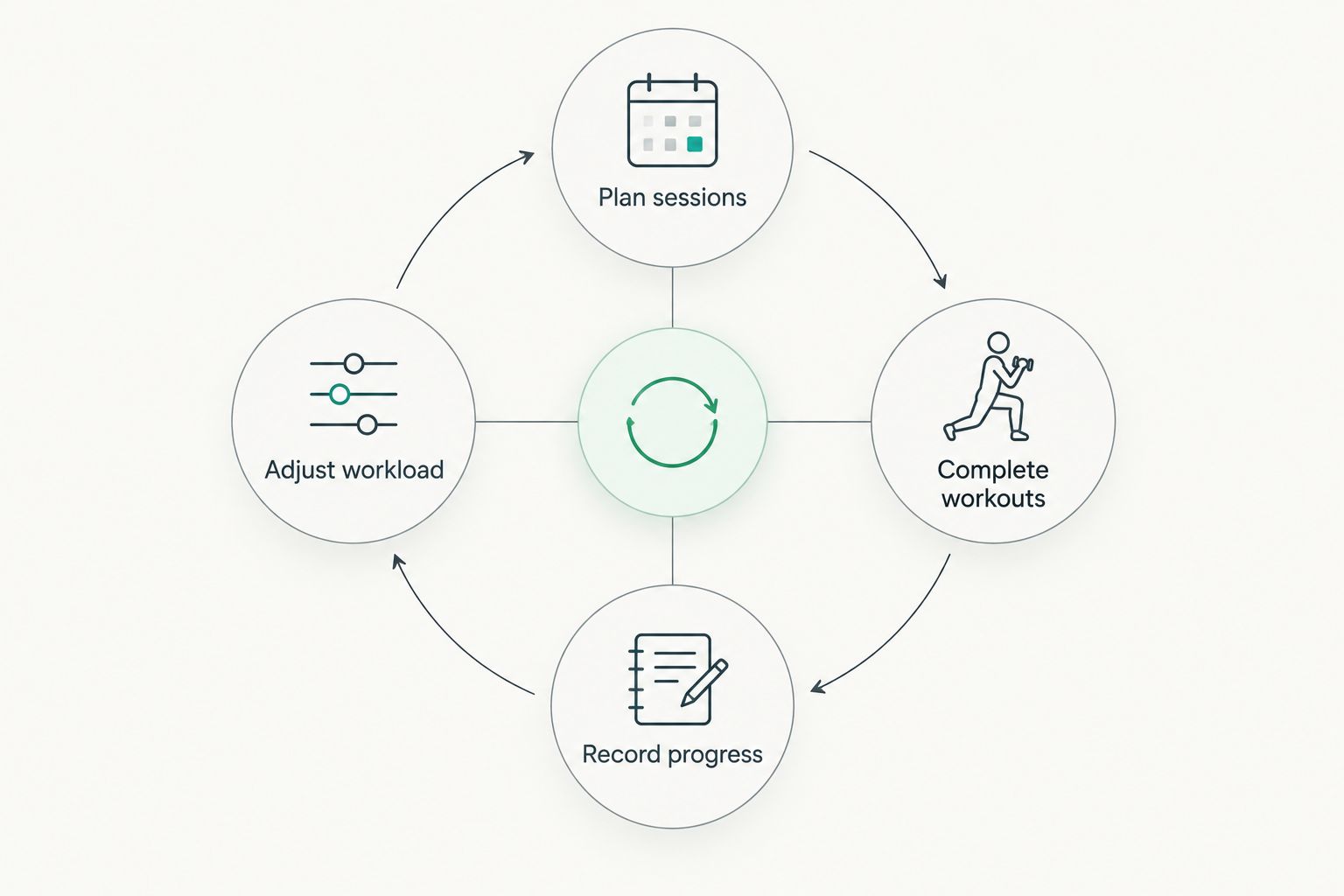
Use this repeatable planning loop for your 2026 schedule: plan sessions, complete workouts, record progress, and adjust workload. Repetition makes the plan easier to review because you can compare what you intended with what happened.
- Plan sessions around protected calendar blocks.
- Complete workouts suited to your current ability.
- Record progress in a short training log.
- Adjust workload with your trainer when needed.
- Keep independent activity visible on the calendar.
Prepare a fallback for travel and deadlines
Write a fallback plan yourself before the next disruption. List the space, equipment, and time you usually have while traveling or working late. Share that information with your trainer so the alternative matches your circumstances.
A fallback is not a punishment workout. Its purpose is to preserve a workable routine when the normal session cannot happen. Walking and a shorter, familiar exercise session are different options; choose according to your goal, environment, and any medical restrictions.
Do not assume missed training creates a debt that must be repaid immediately. Review the week, resume an appropriate schedule, and change the original appointment if the same conflict keeps recurring.
- Identify likely travel and deadline weeks in advance.
- List equipment you can reliably access.
- Agree on familiar exercise substitutions.
- Set a realistic fallback appointment.
- Record why the original session was missed.
Align meals and progress reviews with your workload
Begin with ordinary meal planning: inspect your work calendar, decide when you will eat, and identify practical meals for office and travel days. A plan that assumes uninterrupted meal preparation will fail to address your actual constraints.
Customized meal planning adds structure, but you still need to check whether the recommendations suit your preferences, routine, and health needs. Ask who creates the plan and how medical dietary needs are handled. Exercise coaching does not replace individualized medical nutrition care when that care is needed.
Treat InBody composition analysis as one source of information, not a standalone judgment. Bioelectrical impedance estimates are affected by measurement conditions, including hydration. Review measurements alongside attendance, strength, and other relevant indicators.
- Identify meal decisions that repeatedly cause difficulty.
- Plan practical food choices for office days.
- Explain dietary restrictions before accepting a meal plan.
- Follow consistent preparation instructions for body-composition checks.
- Review several progress indicators together.
Compare training options for your schedule
Choose the option that addresses your biggest obstacle with the least unnecessary complexity. Individual instruction, shared classes, and independent exercise serve different purposes. More support is useful only when you can use it.
The table compares formats rather than promising that one produces faster results. Confirm appointment arrangements, coaching scope, and current terms directly before committing.
| Option | Best for | Main advantage | Key limitation |
|---|---|---|---|
| Self-directed training | Professionals comfortable planning and performing their own workouts | You control the timing and exercise selection | No live coach to observe technique or adapt the session |
| Personal training at TBT Fitness Studios | Professionals seeking individual coaching alongside optional meal planning and composition analysis | Personal training is available with related fitness services | Appointments require coordination; confirm scheduling and service scope |
| Group fitness classes | Professionals who prefer a shared session and set structure | The class supplies a planned workout | The timetable and shared format allow less individual control |
| Mixed coached and independent training | Professionals who want instruction while retaining independent workout time | Coaching and self-managed activity serve different needs | You must carry out and record the independent work |
A mixed routine does not mean improvising between appointments. Ask your trainer what you should repeat independently, which exercises require further instruction, and how to report difficulty.
Discuss your training needs
Explore personal training, group fitness classes, customized meal plans, and InBody composition analysis.
Common mistakes busy professionals make
Booking the workout but ignoring the commute
A session is not just the time spent exercising. Include travel, changing, and the transition back to work before deciding whether an appointment fits. Choose the location and appointment together.
Buying support before identifying the problem
More services do not automatically solve an attendance problem. If unpredictable meetings are the obstacle, address scheduling first; if you lack exercise knowledge, prioritize instruction. Add meal planning or measurement support when it serves a defined goal.
Treating every session as a test
Exhaustion is not a complete progress measure. Tell your trainer about poor sleep, unusual fatigue, and work stress so the session can be adjusted appropriately. Report pain rather than treating it as proof that the workout is effective.
Rewriting the plan after every disrupted week
A missed session calls for a scheduling decision, not necessarily a new program. For your 2026 review, distinguish a one-off disruption from a repeated conflict. Change the appointment when the calendar repeatedly defeats it.
FAQ
What's the best personal training for busy professionals?
The best personal training for busy professionals fits your available time, provides appropriate instruction, and includes a plan for disrupted weeks. TBT Fitness Studios suits professionals seeking personal training alongside customized meal plans and InBody composition analysis; confirm scheduling and coaching scope directly.
How often should I see a personal trainer with a demanding job?
Choose a coaching frequency based on your goals, experience, health needs, and realistic availability. Discuss which sessions need supervision and which activities you can perform independently instead of treating every workout as a coached appointment.
Is personal training better than group fitness classes?
Personal training is better for dedicated individual instruction, while group fitness classes suit people who prefer a shared workout structure. Compare the appointment times and the amount of individual attention you need before choosing.
Can shorter workouts still count toward my weekly activity?
Yes, shorter bouts of physical activity count toward weekly activity totals. Adult public-health guidance recommends at least 150 minutes of moderate-intensity aerobic activity weekly and muscle-strengthening activity on at least 2 days; build toward an appropriate routine gradually.
What should I ask a trainer before getting started?
Ask how the trainer adapts exercise to your ability, reviews progress, and handles schedule disruptions. Also discuss relevant qualifications, injuries, medical restrictions, and the support included outside appointments.
Do I need an InBody scan to start personal training?
No, an InBody scan is not a prerequisite for starting personal training. Body-composition estimates can add information, but attendance, exercise performance, and other relevant measures also help you review progress.
What should I do when business travel interrupts training?
Use a fallback plan agreed before the trip. Tell your trainer what space, equipment, and time you expect to have, then resume an appropriate routine without trying to repay every missed workout at once.
One last thing
Before choosing a trainer in 2026, put the proposed appointment into your real calendar, including the journey and the return to work. Then identify what would displace it. That small scheduling test exposes a problem that an impressive exercise plan cannot fix: an appointment you cannot consistently attend.