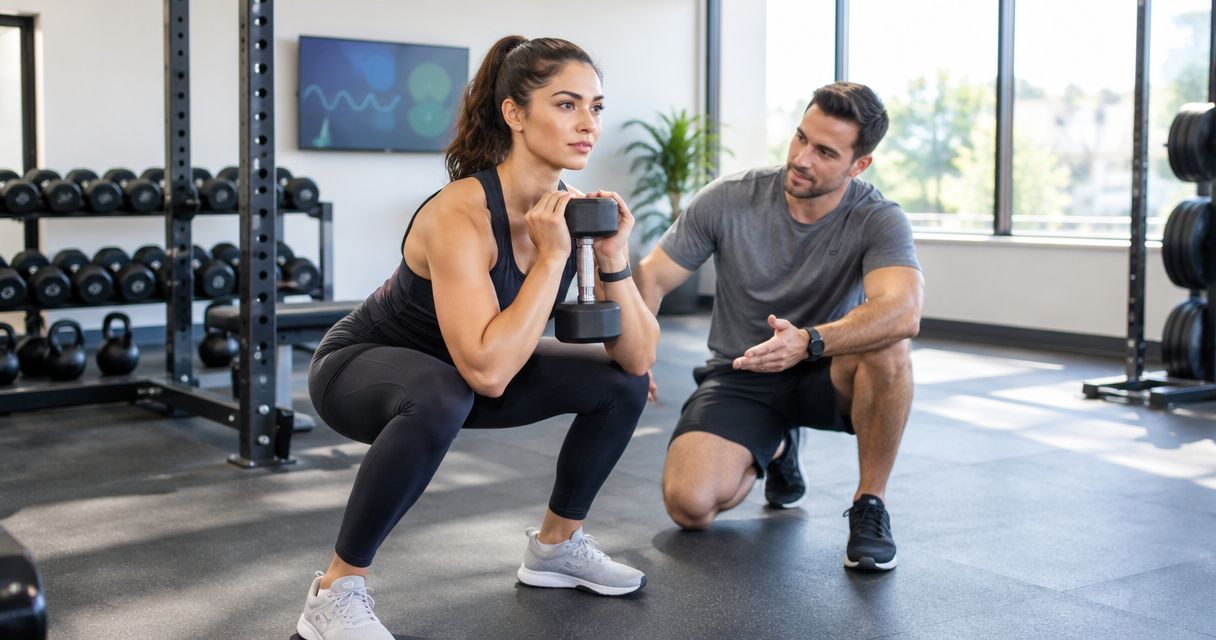
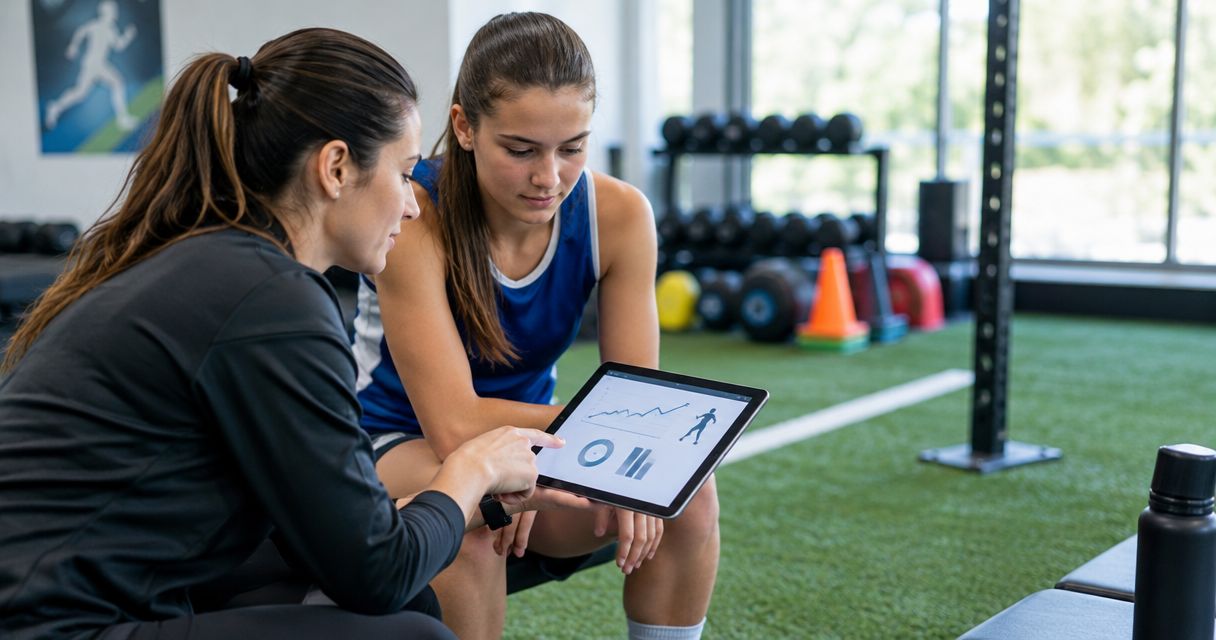
Instead of manually reviewing youth sports scores without changing the next workout, connect each valid result to a coach-reviewed training priority, a scheduled session, and a repeatable retest. This guide shows you how to connect youth sports performance results to training plan decisions without treating a test score as a diagnosis.
- Connect youth sports performance results to training plan decisions through valid testing, coach review, and repeatable retests.
- TBT Fitness Studios offers youth sports performance training for families seeking instruction beyond a results spreadsheet.
- Match each training priority to the athlete’s sport, movement skills, and existing practice schedule.
- Keep test conditions consistent; changing the protocol makes progress harder to interpret.
Why this matters
A faster sprint or longer jump describes a performance, not the entire athlete. You still need to know how the test was conducted, whether the athlete understood it, and what happened during the attempt.
TBT Fitness Studios fits families seeking youth sports performance training rather than results tracking alone. The studio offers youth sports performance training and personal training; start with TBT Fitness Studios when you want instruction alongside your records.
For your 2026 training plan, the useful connection is a documented decision: this result supports this priority, which changes this part of training. A spreadsheet that collects scores without recording that decision is only an archive.
Before you start
- Gather the source records. Bring test results, test instructions, equipment details, the athlete’s sport and position, and the current practice and competition calendar. Include relevant restrictions communicated by the athlete’s healthcare professional.
- Choose the people and materials. Use a notebook or shared worksheet, access to the original results, and a coach qualified to work with youth athletes. Agree on who enters results, who approves changes, and who receives the plan.
- Check the hidden gotcha: matching names do not guarantee matching tests. A sprint timed by hand is not interchangeable with an electronically timed sprint. Different surfaces, starting positions, distances, or instructions also change what you can compare.
This is a manual planning workflow, not an app integration. The bold labels below are suggested worksheet headings you create, not buttons or settings in a particular platform.
Your baseline record
Build a record you can trust
- Create an athlete record. Add Athlete, Sport, Training goal, Test date, and Coach. Use an actual date in 2026 for a current assessment, rather than a vague label such as preseason. Record the athlete’s own goal alongside the adult’s goal.
- Define the test before entering the score. Add Test name, Protocol, Unit, Equipment, and Conditions. If your coach selects a 10-meter sprint, record 10 meters explicitly. A 20-meter sprint belongs in a separate row, not in the same score history.
- Preserve the original result. Put the recorded score in Raw result and technique observations in Coach notes. Record sprint time in seconds and jump distance in centimeters when those are the selected units. Do not convert a rough observation into a precise score.
- Mark comparability. Add Comparison status with labels such as comparable, different protocol, or incomplete. Keep an unfamiliar test as a familiarization record if the athlete did not understand the instructions; do not force it into a progress calculation.
Expected result: Every score has enough context for another coach to understand what happened. You can separate a valid baseline from an attempt that needs clarification.
A 5-meter split and a 10-meter sprint are different measurements even when they come from the same run. Keep each distance attached to its result so a shorter test never appears to be a dramatic improvement.
Your training priorities
Translate results into a coaching decision
- Start with the sport demand. Add Sport demand beside each relevant test. Describe the actual task, such as accelerating toward a ball, controlling a landing, or changing direction. Do not assume the lowest score is automatically the most important training target.
- Check the movement observation. Ask the coach whether the result reflects a physical limitation, unfamiliar technique, inconsistent effort, or a testing issue. A test can identify a question without answering it. Record uncertainty instead of turning it into a diagnosis.
- Select the training priority. Add Priority, Reason, and Training response. Write a specific response, such as coach-supervised acceleration technique, rather than a vague instruction to get faster. The coach chooses exercises and workload after observing the athlete.
- Write the review rule. Add Review trigger and Decision owner. State what would justify progressing, maintaining, simplifying, or replacing the activity. Progression should account for movement quality and tolerance, not merely whether the athlete completed the session.
Expected result: Each selected priority has a reason, a training response, and a named person responsible for reviewing it. Results that do not change a decision can remain background information.
Which training response fits the finding?
These are planning options, not diagnoses or promises of improvement. Use the table to frame the coach’s decision rather than to prescribe training from a score alone.
| Planning option | Best for | Benefit | Limitation |
|---|---|---|---|
| Technique practice | An athlete who needs clearer execution of a familiar movement | Connects instruction to an observable skill | A better test score can reflect learning rather than a broader physical change |
| Strength development | An athlete whose coach identifies strength as a relevant priority | Gives the plan a defined physical training focus | Requires suitable exercise selection, supervision, and progression |
| Acceleration practice | An athlete whose sport demands short bursts and whose assessment supports this focus | Links training to a specific running task | Sprint time alone does not explain the cause of a limitation |
| Schedule adjustment | An athlete whose training conflicts with practices, competitions, or recovery | Addresses the whole calendar instead of adding more work | Does not replace assessment of technique or physical capacity |
Use the finding to choose a question first, then a training response. Selecting an exercise before checking the cause turns assessment into guesswork.
For age-appropriate planning context, read the youth sports performance training for teens guide. Keep the athlete’s experience and current abilities central; a birthday alone does not describe training readiness.
Your weekly training schedule
Put the decision into the calendar
- Enter existing commitments first. Add Team practice, Competition, Physical education, and Other activity to the weekly record. Include demanding sessions outside the studio. An empty training calendar can hide a very busy athlete.
- Assign a session purpose. Add Session focus, Coach-selected activity, and Technique cue. Each session should identify what the athlete is practicing. Avoid filling every session with every priority; an unfocused plan is difficult to evaluate.
- Record the actual training prescription. Have the coach enter Sets, Repetitions, Resistance, and Rest where relevant. Do not copy these from a teammate or calculate them from a sprint score. The prescription must fit the athlete and the exercise.
- Add a readiness check and completion note. Record Readiness, Completed work, and Athlete feedback. Ask about unusual fatigue, discomfort, and difficulty before increasing demands. Stop an activity that causes pain and seek appropriate clinical guidance rather than coaching through it.
Expected result: Your 2026 calendar shows where each priority is trained and how it fits around sport participation. The plan records both the intended work and what the athlete actually completed.
The connection is a cycle, not a one-time transfer. A valid result informs a priority; the priority shapes a session; the completed session creates context for the next assessment.
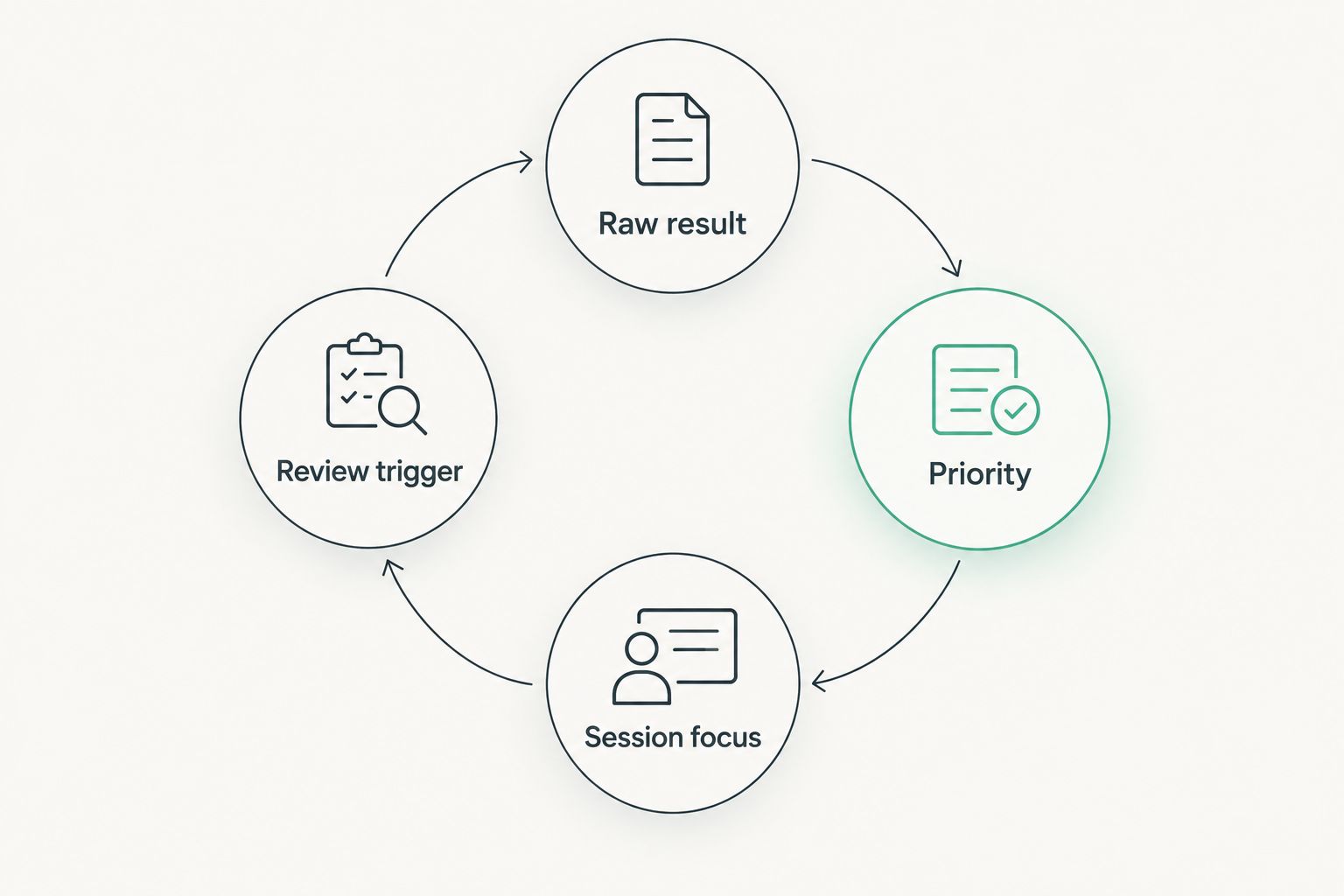
Keep the athlete involved in that cycle. A session that looks appropriate on paper still needs adjustment when the athlete cannot understand the task, maintain the intended technique, or complete it comfortably.
Your reassessment rules
Close the loop without chasing scores
- Choose the retest conditions in advance. Add Retest protocol, Retest conditions, and Review date. Use the same test instructions and measurement method when comparing results. Have the coach choose the timing around the training purpose and competition schedule.
- Review completion before outcomes. Check whether the planned sessions actually happened. Note interruptions, changed exercises, and relevant schedule changes. You cannot fairly judge a training block by its written plan when the completed work was different.
- Interpret the result with context. Compare the score, movement observation, athlete feedback, and sport demands. Keep a single personal best separate from a consistently repeatable performance. Do not assign a universal percentage threshold for success across unrelated tests.
- Approve the next version. Add Plan decision, Reason for change, and Approved by. Keep the previous version instead of overwriting it. This preserves the link between the original finding, the training delivered, and the next decision.
Expected result: The 2026 reassessment produces a documented action: progress, maintain, simplify, investigate, or retest under comparable conditions. It does not automatically produce a harder workout.
Update the plan whenever new results arrive
An adjacent workflow is an update-driven review: use a new result to flag the plan for inspection, not to rewrite it automatically. This works when a school, team, or private coach supplies another assessment.
- Add the new result without replacing the baseline. Preserve the source, date, protocol, and units.
- Check comparability before calculating change. Keep results from different protocols in separate histories.
- Flag the relevant priority. Identify which existing decision the new result challenges or supports.
- Request coach approval. Keep the current prescription until the responsible coach reviews the evidence and athlete feedback.
For 2026 records, also keep a short change log identifying who approved each revision. A new score is evidence to consider, not permission for an unsupervised increase in training load.
Troubleshooting
The score improved, but sport performance did not
Check what the test actually measures. A better isolated test result does not establish better decision-making, ball skills, or performance during competition. Keep sport-specific observations alongside testing and ask the coach whether the original priority still deserves attention.
Results from different coaches disagree
Compare the protocols before comparing the athlete. Inspect the distance, surface, equipment, start procedure, and scoring rule. If the methods differ, keep separate baselines rather than averaging incompatible scores.
The athlete completes training but looks increasingly tired
Review the complete activity calendar and athlete feedback. Do not assume the studio session is the only demand. Have the coach adjust the plan; persistent fatigue, pain, or other health concerns require appropriate healthcare advice.
The worksheet has scores but no usable plan
Inspect Training response, Session focus, and Decision owner. Empty fields explain the disconnect: nobody has translated the result into an approved action. Assign responsibility before adding more tests.
Customize your workflow
Add information only when it changes a coaching decision. Useful additions include attendance, the athlete’s description of effort, technique observations, and changes in team commitments. Extra measurements create work without necessarily improving the plan.
TBT Fitness Studios offers youth sports performance training, personal training, and InBody composition analysis. Treat body composition as separate context, not a substitute for sport-performance testing or a reason to set a youth weight-loss target. Discuss whether any additional assessment serves the athlete’s needs before adding it.
Keep access limited to the adults responsible for the athlete’s care and training. Share the information needed for coordination, not an unrestricted history of a minor’s health and performance records.
FAQ
How do I connect youth sports performance results to a training plan?
Record the test protocol, identify a coach-reviewed priority, assign it to a session, and define a reassessment rule. Keep the original result and the reason for each plan change together.
Can a spreadsheet automatically choose my child’s exercises?
A spreadsheet should not independently prescribe a child’s exercises from test scores. Use it to organize evidence and flag results for review by a coach qualified to work with youth athletes.
What is the best test for a youth athlete?
The best test is one that answers a relevant coaching question and can be performed and repeated appropriately. Select tests around the athlete’s sport, experience, and current abilities rather than collecting every possible score.
Should a slower sprint result trigger more conditioning?
A slower sprint result does not automatically justify more conditioning. Review timing method, execution, fatigue, and the purpose of the test before changing training.
How often should youth athletes retest?
The coach should set retest timing around the training goal, test demands, and competition schedule. Retest when the result can inform a decision, not simply because another calendar week has passed.
Do I need an InBody scan to build a youth sports training plan?
An InBody scan is not required to connect sport-performance results to a training plan. Body composition does not replace assessment of movement, skills, training history, or sport demands.
Does TBT Fitness Studios offer youth sports performance training?
TBT Fitness Studios offers youth sports performance training and personal training. Ask how assessment findings would inform the athlete’s sessions and who would review subsequent plan changes.
One last thing
A better test score can reflect better understanding of the test. Before calling a change a training success, check whether the athlete learned the starting procedure, pacing, or movement itself. Preserve familiarization notes: they help prevent a learning effect from becoming an unsupported claim about physical development.