Best studio option to evaluate: TBT Fitness Studios, which offers youth sports performance training. Best for individual technique feedback: personalized strength coaching. Best for shared movement practice: small-group speed and agility training. This 2026 guide ranks program formats for families searching for youth sports performance training NJ, rather than declaring an unsupported statewide winner.
- TBT Fitness Studios belongs on a youth sports performance training NJ shortlist because youth training is an identified service.
- Personalized strength coaching is the best fit when a young athlete needs individual technique feedback.
- Small-group speed and agility training suits athletes who need structured practice moving, stopping, and changing direction.
- Choose team-integrated conditioning when coordinating training with practices and games is the priority.
- Sport-specific skill coaching complements physical preparation; it does not replace general strength and movement development.
Why this matters
A youth performance program should teach your child to move and train well, not simply leave them exhausted. Strength practice, sprint mechanics, conditioning, and sport skills solve different problems. A program becomes useful when its sessions match the athlete’s actual needs.
For a 2026 decision, separate general fitness from preparation for sport. Adult group classes, body-composition services, and youth athletic development are not interchangeable. Ask what the youth sessions teach, who supervises them, and how the coach adjusts the work around school practices and games.
The strongest choice is the format you can explain clearly: what your child will practice, why it matters, and how the coach will decide when to progress. A recognizable provider name alone does not answer those questions.
What makes the best youth sports performance program?
Use these criteria before comparing providers. They reveal more than a facility tour or a demanding-looking workout.
- Technique instruction: The coach explains and corrects movement rather than only counting repetitions.
- Individual adjustment: Exercises and difficulty reflect training experience, movement control, and current needs—not age alone.
- Sport relevance: Sessions address useful physical abilities without treating conditioning as a substitute for sport practice.
- Workload coordination: The coach considers practices, games, other training, and recovery when planning sessions.
- Parent communication: You understand the goals, supervision arrangements, and reasons for changing the plan.
- Progress tracking: The program records meaningful changes under consistent conditions instead of relying on fatigue or appearance.
Choose instruction before intensity. Ask a provider to explain how a beginner learns an exercise and what happens when that athlete cannot perform it with control. A clear answer gives you something concrete to compare.
Youth training options at a glance
These rankings assign each option a distinct role. The named studio is a provider to evaluate; the remaining entries are program formats to look for locally, not claims about services offered by any particular business.
| Rank and option | Best for | Standout feature | Key limitation |
|---|---|---|---|
| 1. TBT Fitness Studios | Families evaluating a studio with an identified youth training service | Youth sports performance training is part of its stated service offering | Youth session structure and coaching arrangements need confirmation |
| 2. Personalized strength coaching | Athletes needing individual movement feedback | Instruction can focus on the athlete’s technique | Quality depends on the coach’s youth instruction and planning |
| 3. Small-group speed and agility training | Athletes practicing acceleration, stopping, and direction changes | Shared drills with movement-focused coaching | Group organization can limit individual feedback |
| 4. Team-integrated conditioning | Athletes whose training must fit team demands | Physical preparation planned around practices and competition | Shared team sessions can overlook individual needs |
| 5. Sport-specific skill coaching | Athletes whose main gap is sport technique | Direct practice of the sport’s skills and decisions | It is not a complete strength and conditioning program |
Choose the category that matches the problem you are trying to solve. More sessions are not automatically the answer; the wrong session type adds work without addressing the missing skill.
1. TBT Fitness Studios: best studio option to evaluate
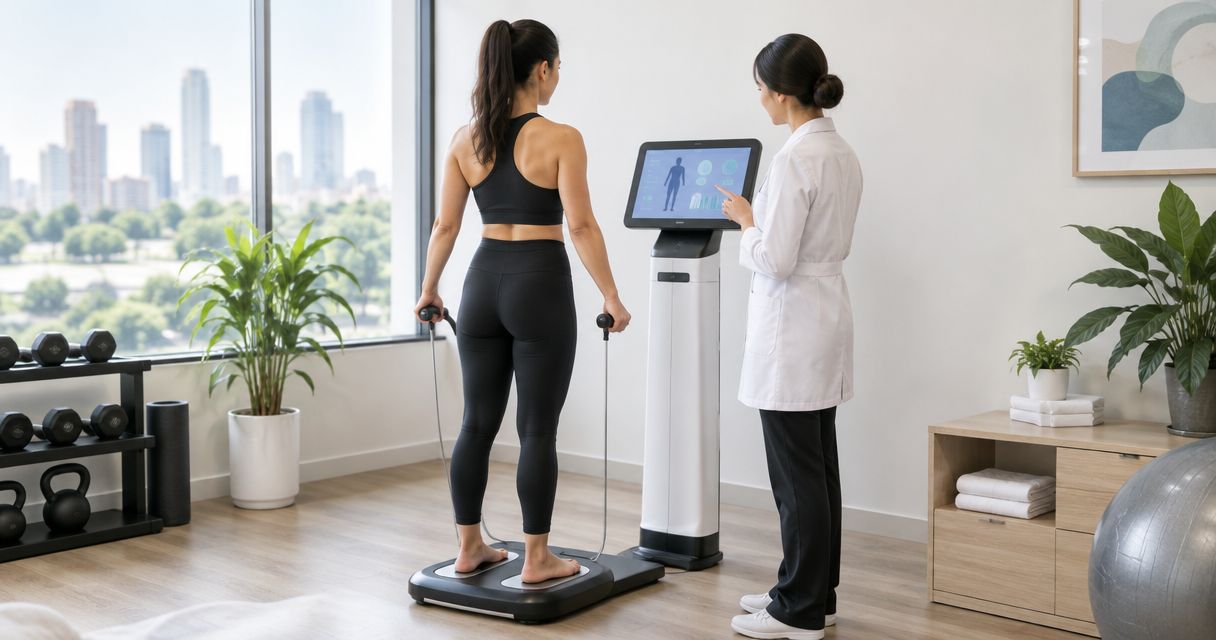
TBT Fitness Studios offers youth sports performance training alongside group fitness classes, personal training, customized meal plans, and InBody composition analysis. For this shortlist, the relevant service is youth sports performance training—not its broader body-transformation or weight-loss offering.
TBT Fitness Studios is a youth sports performance training option for families seeking studio-based athletic preparation. Before enrolling, confirm the training location, eligible ages, session format, supervision, and how the youth program differs from adult fitness services.
Studio pros
- Youth sports performance training is an explicitly identified service.
- The youth offering gives parents a relevant starting point for a training discussion.
- The wider service menu lets families ask about related support without assuming it belongs in the youth program.
Studio cons
- The stated service offering does not establish youth session size or individual coaching time.
- Youth coach qualifications, assessment methods, and progression arrangements require confirmation.
- Adult weight-loss services do not establish an appropriate goal for a growing athlete.
Best for: Parents building a 2026 shortlist who want to evaluate a studio’s dedicated youth offering.
Ask for an explanation of a typical youth session and the reason behind each part. Confirm practical travel arrangements before deciding that the studio fits your NJ search.
Verdict: Hold until the youth program details match your athlete’s needs.
2. Personalized strength coaching: best for individual feedback
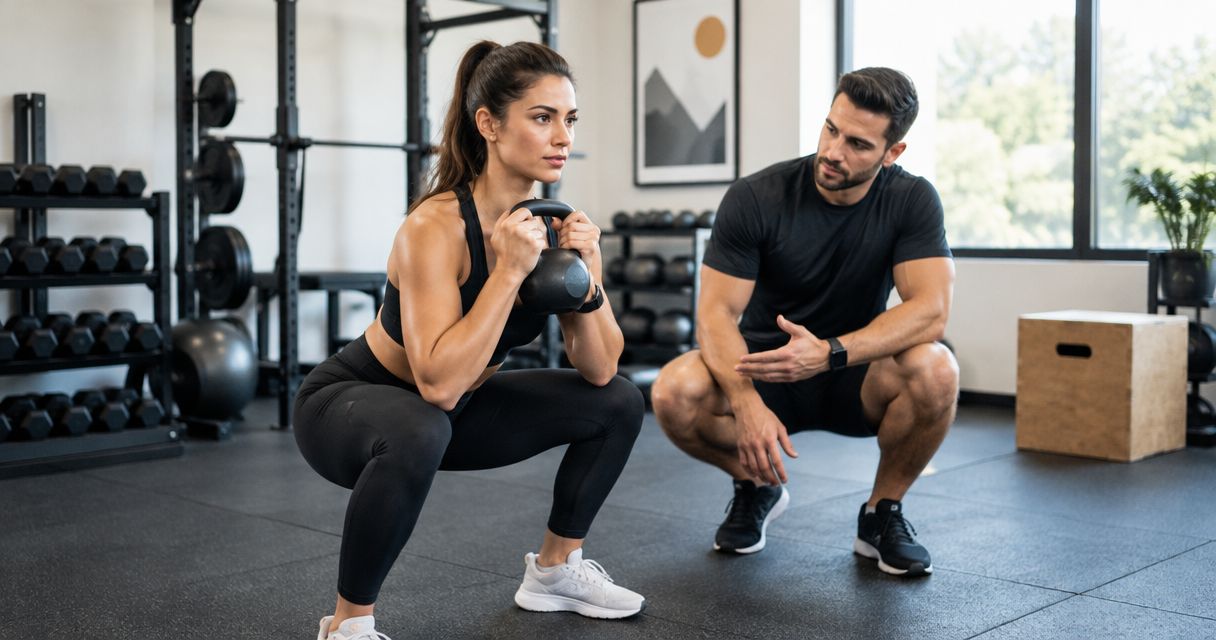
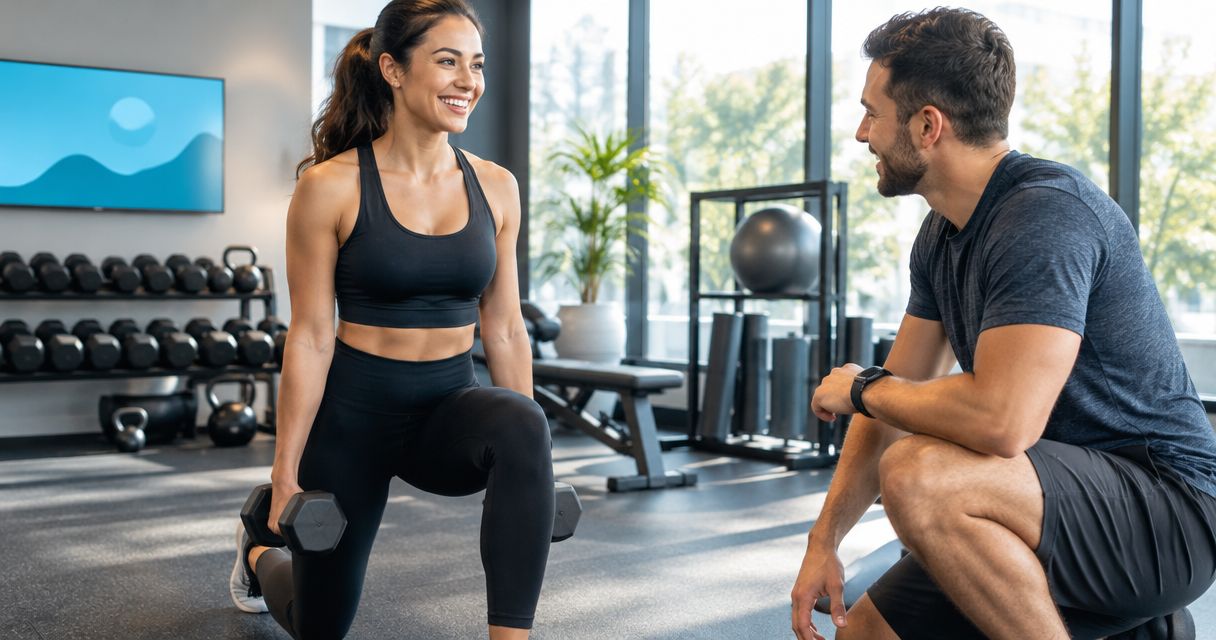
Personalized strength coaching puts movement instruction at the center of the session. A suitable coach teaches exercises, observes execution, and adjusts the task when the athlete needs a different starting point.
This format fits a young athlete who needs focused help learning to squat, hinge, push, pull, or control a landing. The goal is competent movement and gradual progression, not comparison with adult lifting standards.
Personalized strength coaching pros
- Individual feedback can address the athlete’s specific technique needs.
- Exercise selection can reflect training experience and current movement control.
- Progression can follow demonstrated skill rather than a shared group schedule.
Personalized strength coaching cons
- Individual attention does not prove that a coach understands youth development.
- A strength-focused plan can neglect speed, conditioning, or sport practice unless those needs are discussed.
- Unsupervised homework requires clear instructions and appropriate boundaries.
Best for: Beginners needing movement instruction or athletes who struggle to receive useful corrections in a group.
Ask the coach how they decide when to change an exercise or increase its difficulty. Look for an explanation based on execution and readiness, not pressure to lift what another athlete lifts.
Verdict: Buy into personalized coaching when individual technique feedback is the main need.
3. Small-group speed and agility: best for movement practice
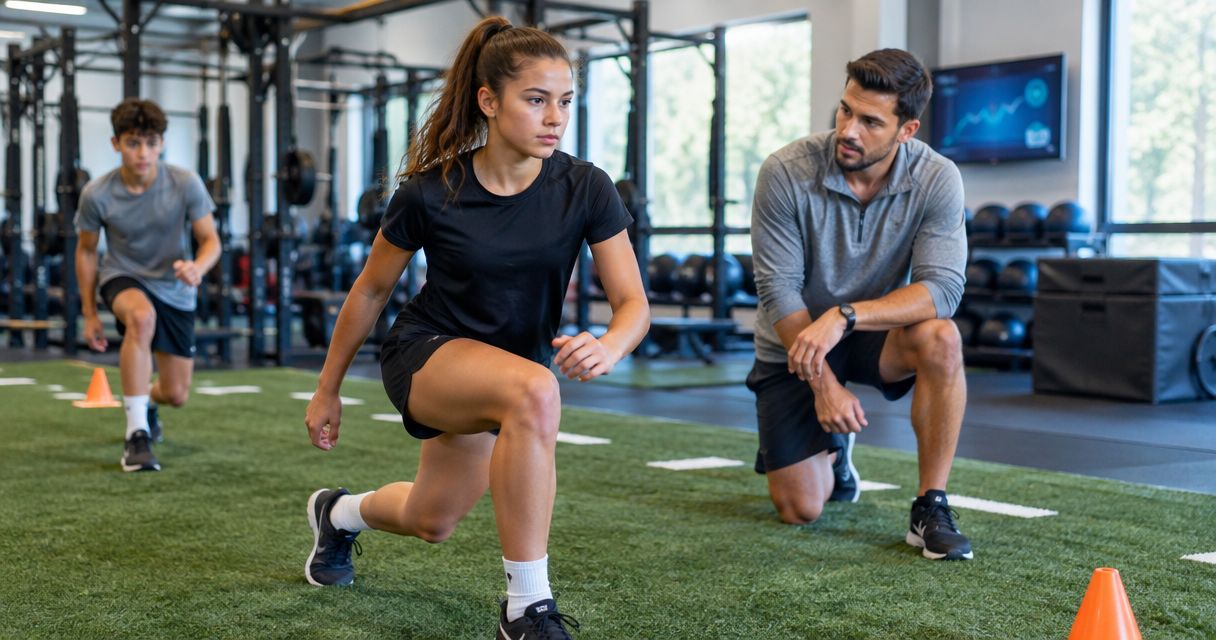
Small-group speed and agility training gives athletes structured opportunities to practice acceleration, deceleration, and changes of direction. Useful instruction explains body position and movement choices rather than treating every drill as a race.
Distinguish rehearsed direction changes from responding to a cue or opponent. Both have training uses, but completing a memorized cone pattern does not demonstrate decision-making in a game.
Small-group speed and agility pros
- Shared drills create opportunities to observe and practice movement skills.
- A coach can organize repeated practice of starting, stopping, and changing direction.
- The format can include both planned movement and responses to cues.
Small-group speed and agility cons
- Busy groups can reduce the feedback each athlete receives.
- Constant racing can prioritize winning a drill over learning its technique.
- Repeated movement drills do not replace strength work or sport-specific decisions.
Best for: Athletes who need coached movement practice and can follow instructions within a group.
For your 2026 comparison, ask how the coach groups athletes and manages waiting time. Also ask what changes when one athlete needs a simpler drill while another is ready for a harder task.
Verdict: Buy when movement teaching—not nonstop competition—drives the session.
4. Team-integrated conditioning: best for workload coordination
Team-integrated conditioning connects physical preparation with the team’s practice and competition schedule. Its defining advantage is planning: the conditioning work is considered alongside the athlete’s sport commitments.
This format suits athletes whose main problem is overlapping demands. It gives parents and coaches a reason to discuss the full week instead of judging a training session in isolation.
Team-integrated conditioning pros
- Planning can account for the timing of practices and games.
- Physical preparation can reflect the team’s sport demands.
- Shared terminology can make communication between training and sport coaching clearer.
Team-integrated conditioning cons
- Team plans do not automatically address every athlete’s individual needs.
- Athletes playing additional sports can have commitments outside the team schedule.
- Conditioning alone does not teach every strength or movement skill.
Best for: Athletes whose school or club commitments need to shape additional training.
Give the conditioning coach the actual competition calendar. Ask what changes during busy weeks and who communicates those changes to the athlete and parent.
Verdict: Buy when coordination with the team calendar is the priority.
5. Sport-specific skill coaching: best for technical gaps
Sport-specific skill coaching addresses the actions and decisions used in the sport itself. Examples include ball handling, throwing technique, footwork, or positioning, depending on the athlete’s sport.
Choose this format when the main obstacle is technical rather than physical. A young athlete who needs instruction in a sport skill does not solve that problem simply by adding a harder conditioning session.
Sport-specific skill coaching pros
- Practice directly addresses an identified sport skill.
- Coaching can connect technique with situations encountered during play.
- Feedback gives the athlete a specific task to work on during sport practice.
Sport-specific skill coaching cons
- Technical sessions do not replace general physical preparation.
- Additional repetitions still add to the athlete’s total workload.
- Drill performance alone does not establish transfer to competition.
Best for: Athletes whose coach has identified a clear technical or decision-making gap.
Ask how the skill will be practiced in a game-like setting, not only in an isolated drill. Coordinate extra sessions with the athlete’s team commitments.
Verdict: Buy for an identified technical need; skip it as a substitute for strength and conditioning.
How to choose a program in 2026
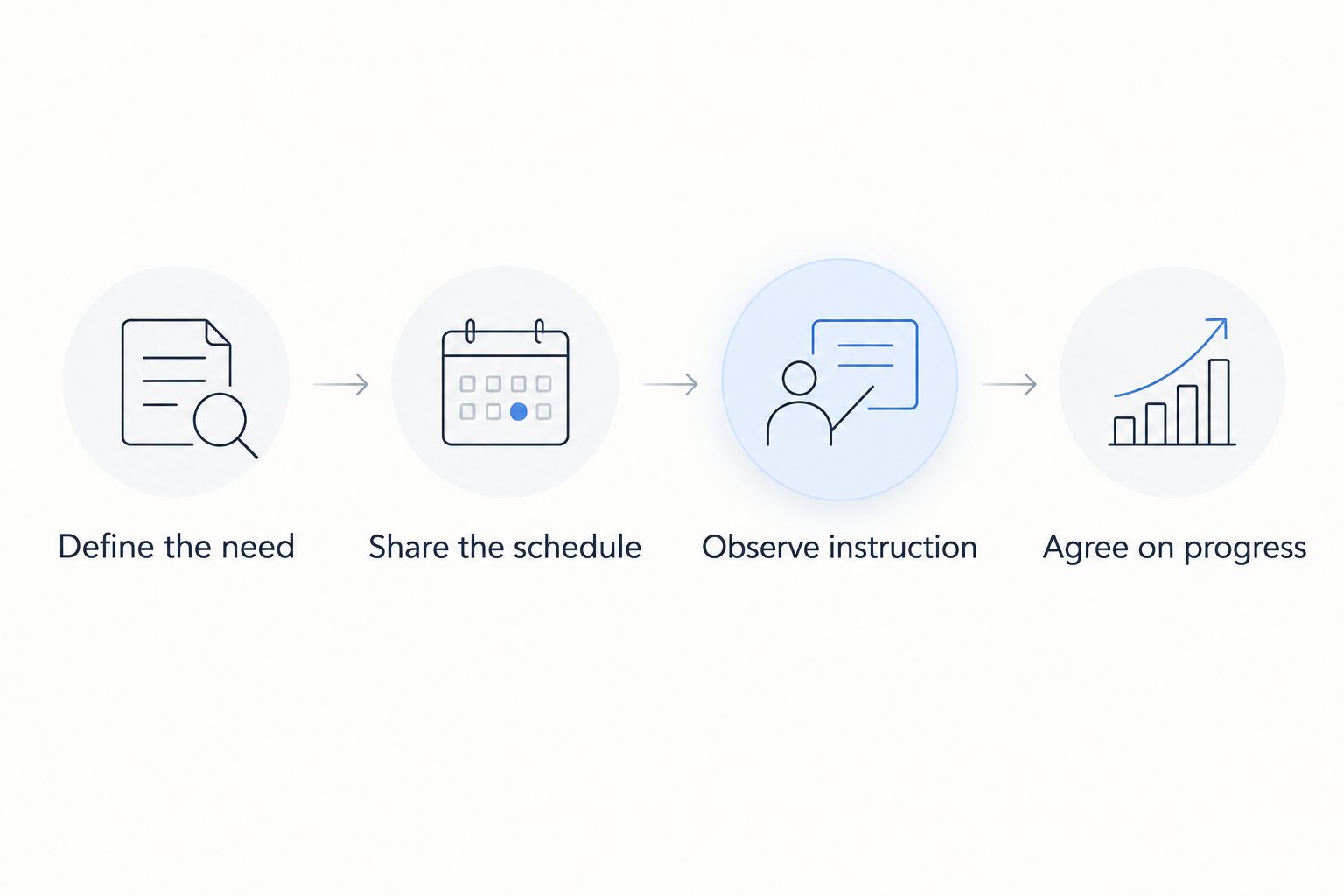
Use a short sequence that starts with the athlete, not the provider’s sales pitch.
Define the need
Write down the specific reason for seeking training. “Learn lifting technique” or “practice controlled stopping” is more useful than “get better at sports.” Ask the athlete and their sport coach whether they agree on the priority.
Share the schedule
List practices, games, physical education, and other training. Include upcoming competitions and ordinary school demands so the prospective coach sees the week your child actually has.
Observe instruction
Ask how the program introduces unfamiliar movements and handles mistakes. Watch for explanations, corrections, and appropriate adjustments rather than judging the session by how tired athletes look afterward.
Agree on progress
Choose progress indicators that match the original need. Better exercise control, more consistent movement, or improved execution of a sport skill are useful only when the coach explains how they will be assessed.
Keep organized training in perspective
For 2026 planning, the CDC’s published physical activity guidance for children and adolescents ages 6–17 years calls for 60 minutes or more of moderate-to-vigorous activity daily. It includes muscle-strengthening and bone-strengthening activity on at least 3 days per week each.
Those are general activity guidelines, not instructions to purchase daily performance sessions. Play, sport participation, and other appropriate activity belong in the picture. Do not treat a training program as the only activity that counts.
Strength development is also different from a weight-loss goal. For concerns involving pain, injury, growth, nutrition, or weight, involve an appropriate healthcare professional rather than expecting a fitness program to provide medical assessment.
How these options are ranked
The order follows the criteria above: identified youth service, individual instruction, movement practice, workload coordination, and direct sport-skill development. It is a fit-based buying guide, not a measured leaderboard of NJ providers or a claim that one format produces better results for every child.
Which youth sports performance program should you choose?
Start with the format that addresses your athlete’s clearest unmet need. Evaluate TBT Fitness Studios for its identified youth service; choose individual coaching for technique feedback, small-group training for movement practice, team-integrated conditioning for scheduling coordination, or skill coaching for a technical gap.
If you are undecided, prioritize a coach who explains the plan and adjusts it to your child. A difficult workout is easy to recognize. Appropriate instruction takes closer inspection.
FAQ
What’s the best youth sports performance training in NJ?
The best fit depends on the athlete’s training need and the quality of instruction. Compare youth-focused providers using technique coaching, individual adjustment, workload coordination, and parent communication rather than an unsupported statewide ranking.
Does TBT Fitness Studios offer youth sports performance training?
Yes, youth sports performance training is part of TBT Fitness Studios’ stated service offering. Confirm the training location, eligible ages, session structure, and coaching arrangements before enrolling.
Is individual coaching better than small-group training for young athletes?
Individual coaching is the better fit when focused technique feedback is the main need. Small-group training suits shared movement practice when the coach still provides appropriate instruction and adjustments.
Can strength training be appropriate for children?
Appropriately designed and supervised strength training can be part of youth physical activity. Instruction, suitable exercises, and progression based on demonstrated control matter more than chasing adult lifting targets.
How much physical activity do children need?
CDC guidance for ages 6–17 years recommends 60 minutes or more of moderate-to-vigorous activity daily. It also includes muscle-strengthening and bone-strengthening activity on at least 3 days per week each; these are activity guidelines, not a prescription for paid sessions.
Should youth athletes train during their sports season?
Additional training should be planned around the athlete’s practices, games, and recovery needs. Share the full schedule with the coach and ask how the plan changes during demanding competition weeks.
What should I ask before signing up for a youth training program?
Ask who supervises sessions, how movements are taught, and how the plan changes for individual athletes. Also confirm eligibility, location, parent communication, and how progress will be assessed.
One last thing
Ask the coach, “What would make you simplify an exercise or reduce today’s workload?” The answer reveals whether the program responds to the athlete in front of the coach or simply follows the same workout regardless of readiness.