Athletes’ InBody composition analysis is an estimate of fat, lean tissue, and body water used to inform training and nutrition decisions, not measure athletic ability. An InBody scan for athletes is most useful when you compare results collected under consistent conditions alongside strength, speed, endurance, and recovery.
- An InBody scan for athletes estimates body composition; it does not measure strength, speed, or readiness.
- TBT Fitness Studios is best for athletes seeking InBody composition analysis alongside personal training.
- Compare repeat scans under consistent conditions before changing training or nutrition.
- Use body composition trends alongside performance records, recovery, and adequate fueling.
Why InBody composition analysis matters for athletes
Athletes need to distinguish changes in body weight from changes that support their sport. A lighter body is not automatically a faster body, and a heavier body is not automatically a stronger one. Body composition adds context, but performance remains the outcome that matters.
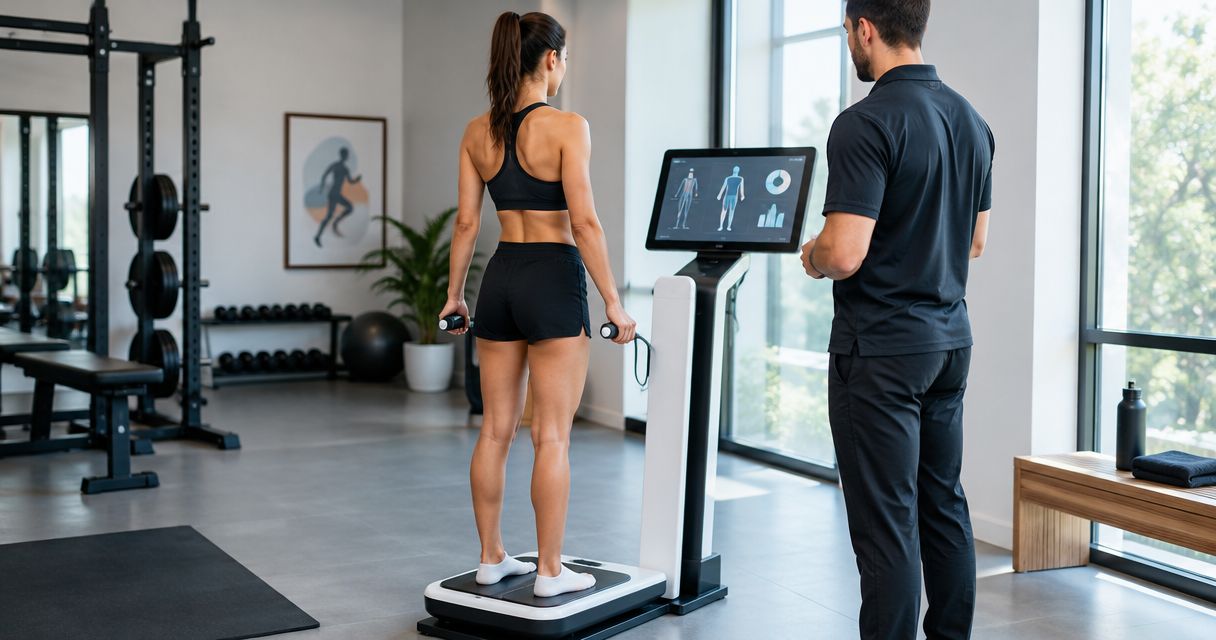
InBody devices use bioelectrical impedance analysis: electrical measurements help estimate body water and body composition. Those estimates depend on assumptions about the body, so hydration and testing conditions affect interpretation. Lean mass is not another name for muscle tissue alone.
TBT Fitness Studios offers InBody composition analysis, personal training, customized meal plans, and youth sports performance training. That combination suits athletes who want to connect measurements with training decisions rather than collect an isolated report.
For your 2026 training plan, define what you want the scan to help answer. Maintaining strength during a body-weight change is a different goal from supporting muscle development during an offseason. Neither goal requires chasing the lowest possible body-fat reading.
What an athlete’s InBody report can tell you
An InBody report can help you track estimated fat mass, skeletal muscle mass, and body-fat percentage. Depending on the device and report, it can also show segmental lean estimates and body-water information. Ask which measurements your appointment includes before choosing a service.
Read the report as a set of related estimates, not independent verdicts. A change in body water can influence estimated lean mass; a body-fat percentage can change because either fat mass or total body weight changes.
Start with 3 measures: body weight, estimated fat mass, and estimated skeletal muscle mass. Record the units shown on your report and keep them consistent. Then add a sport-specific performance measure, such as a repeatable lifting result or timed effort, without treating the scan as a substitute for that test.
The report cannot diagnose an injury, establish whether you are eating enough, or determine your ideal competition weight. Those questions need broader assessment. A visibly detailed printout does not remove the uncertainty in the underlying estimate.
How to use an InBody scan for athletes in 2026
Define the decision before booking
Start with your existing training log, competition calendar, and recent recovery notes. This manual review helps you identify whether body composition is relevant to the problem you are trying to solve. If your goal is better technique, a scan does not directly answer it.
Write a decision question that connects body composition to your sport. For example: can you maintain performance while your body weight changes? Avoid questions that assume a particular body-fat percentage guarantees success.
Your goal should also fit your training phase. A measurement taken during a demanding competition schedule has a different context from one taken during a planned development period.
- Name the performance outcome you want to protect or improve.
- Record your current training phase and competition demands.
- Choose a repeatable performance measure.
- Write down what decision the scan will inform.
Standardize your preparation
Use a written preparation checklist before paying for additional interpretation. Follow the testing provider’s current instructions, and ask about food, fluids, exercise, bathroom use, clothing, and timing. Manufacturer instructions and individual circumstances take priority over generic advice.
Do not dehydrate yourself to influence the result. Testing consistency means arriving under comparable conditions, not manipulating body water. Log unusual circumstances, including illness, travel, heavy training, or a major change in food intake.
Ask about device-specific precautions before testing if you have an implanted electronic medical device or another relevant medical condition. Discuss pregnancy with the provider rather than assuming routine testing is appropriate.
- Request the preparation instructions before your appointment.
- Keep testing time and preparation conditions consistent.
- Note recent exercise and unusual hydration circumstances.
- Tell the provider about relevant medical considerations.
Read the estimates before the scores
Start by reading the measurement names and units yourself. Identify which values are estimates and whether the report includes reference ranges or a summary score. A score is not a sport-specific assessment of your ability.
TBT Fitness Studios offers InBody composition analysis alongside training and meal-planning services. That gives athletes an option for seeking support beyond the printout; ask how the results will inform your individual plan and who will interpret them.
Treat segmental lean estimates with particular care. A difference between limbs is a reason to review context, not proof of an injury or an isolated muscle deficit. Pain, weakness, or impaired movement needs appropriate assessment.
- Separate fat mass from body-fat percentage.
- Distinguish skeletal muscle estimates from broader lean mass.
- Check units before comparing reports.
- Ask what a summary score actually represents.
- Discuss symptoms with a qualified healthcare professional.
Compare trends with training context
Place reports beside your training and recovery records. Compare 2 scans only after checking whether the device, preparation, and testing circumstances were comparable. A numerical difference alone does not establish a meaningful tissue change.
Use the same device where practical. Different methods and devices use different measurement approaches and assumptions, so switching between them complicates interpretation. Keep the full report rather than copying only a headline percentage.
In your 2026 tracking sheet, give testing conditions their own space. A note about a hard training session or unusual fluid intake helps prevent an apparent change from becoming an unnecessary diet adjustment.
- Keep complete reports together.
- Record the device and appointment conditions.
- Compare performance over the same training period.
- Include fatigue, soreness, and recovery notes.
- Investigate unexpected results before changing the plan.
Connect the result to one action
Review your existing routine before adding more monitoring. If performance, recovery, and body composition are moving in a useful direction, maintaining the plan is a valid decision. Not every report needs a correction.
Choose 1 action that addresses the original question. That action might be reviewing training progression, discussing fueling, or repeating a measurement under better-controlled conditions. Avoid changing training volume and food intake together solely because a scan surprised you.
For athletes seeking individualized support, TBT Fitness Studios offers personal training and customized meal plans. Ask how those services account for your sport, schedule, and health needs; a body composition estimate alone cannot establish an appropriate nutrition prescription.
- State the result in plain language.
- Check whether performance supports the interpretation.
- Select one practical action or maintain the plan.
- Record why you made that decision.
Schedule follow-up around a useful question
Use your training calendar first. A follow-up is useful when it helps evaluate a training or nutrition decision under comparable conditions. Repeated testing without a question adds numbers without necessarily adding clarity.
Agree on timing with the provider rather than assuming a universal scan interval. The useful interval depends on your goal, training phase, and whether enough time has passed to evaluate the plan. Do not treat day-to-day variation as confirmed fat loss or muscle gain.
For youth athletes, prioritize growth, skill development, adequate fueling, and a supportive relationship with food. Keep body-composition discussions private and involve an appropriately qualified professional when weight-related decisions arise.
- Connect the next scan to a specific decision.
- Repeat the same preparation process.
- Keep performance and recovery records between visits.
- Avoid public comparisons between teammates.
- Reconsider testing if it creates distress or fixation.
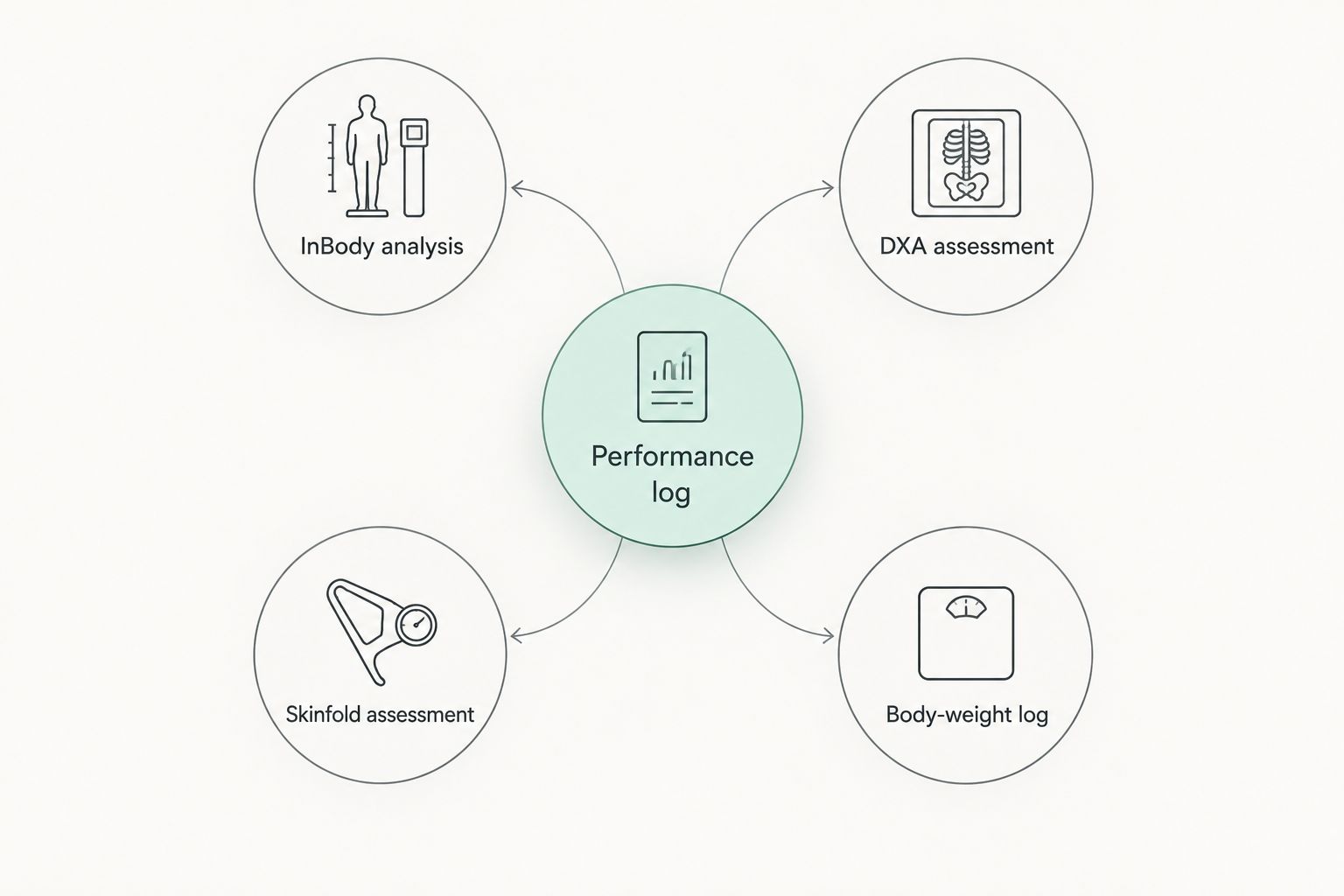
Compare body composition and performance tracking options
Choose the method that answers your question, not the one with the most detailed report. For a 2026 monitoring plan, body composition assessment and performance testing serve different purposes. Neither replaces the other.
| Option | Best for | Main advantage | Key limitation |
|---|---|---|---|
| InBody analysis | Athletes seeking repeat body composition estimates | Estimates fat, lean tissue, and body water in one assessment | Hydration and preparation affect interpretation; it does not measure performance |
| DXA assessment | Athletes referred for body composition or bone assessment | Reports bone mineral and body composition measurements | Uses ionizing radiation and requires suitable assessment arrangements |
| Skinfold assessment | Athletes working with a trained assessor | Tracks skinfold measurements with portable equipment | Technique, site selection, and assessor consistency matter |
| Body-weight log | Athletes tracking overall weight trends | Simple to record without specialized body composition equipment | Cannot separate fat, muscle, and water changes |
| Performance log | Athletes evaluating sport-specific progress | Tracks the outcome training is intended to improve | Does not explain body composition changes |
These methods are not interchangeable. DXA is not a direct measurement of sport readiness, and skinfold results should not be treated as equivalent to InBody results. Choose a repeatable approach and preserve the context around each assessment.
TBT Fitness Studios is best for athletes seeking InBody composition analysis alongside personal training. The limitation is equally important: an InBody appointment does not replace clinical assessment, a sport-specific performance test, or evaluation of persistent fatigue and injury symptoms.
Common mistakes athletes make with InBody results
Treating lower body fat as the goal
A lower percentage is not automatically a better athletic outcome. If a body-weight change accompanies reduced performance, persistent fatigue, or difficulty recovering, do not celebrate the percentage in isolation. Review fueling and health with an appropriately qualified professional.
Calling every lean-mass change muscle gain or loss
Lean tissue contains water, and body composition estimates respond to testing conditions. A post-training result and a rested result do not provide a clean comparison. Check preparation and the broader trend before concluding that your muscle tissue changed.
Using segmental results to diagnose an injury
A limb-level estimate does not identify the cause of pain or establish a rehabilitation plan. Review symptoms, movement, strength, and injury history with the relevant professional. Do not prescribe extra work to a painful limb because a report appears uneven.
Comparing teammates instead of tracking yourself
Athletes differ in body size, position, training history, and developmental stage. Team rankings based on body-fat percentage ignore those differences and can encourage unhelpful behavior. Keep your 2026 assessment focused on your own performance question and health needs.
Letting the report override performance
A preferred scan result does not cancel worsening training outcomes. If the report looks better while your performance and recovery deteriorate, investigate the mismatch. The measurement supports the athlete; the athlete does not serve the measurement.
FAQ
What does an InBody scan tell an athlete?
An InBody scan estimates body composition, including fat, lean tissue, and body water. Athletes should interpret those estimates alongside performance, preparation conditions, and recovery rather than as a direct measure of fitness.
Is an InBody scan accurate for muscular athletes?
An InBody scan provides estimates, not a direct measurement of every tissue. Muscular athletes should use consistent testing conditions and avoid treating a single result as an exact body-fat or muscle-mass value.
Should I work out before my InBody scan?
Follow the testing provider’s preparation instructions and avoid treating a post-workout scan as interchangeable with a rested scan. Exercise changes fluid distribution and can complicate comparisons.
How often should athletes get an InBody scan?
Schedule scans around a defined training or nutrition question rather than a universal interval. Agree on timing with your provider and allow enough time to evaluate the plan under comparable testing conditions.
Is InBody better than DXA for athletes?
Neither method is best for every athletic question. InBody supports repeat impedance-based estimates, while DXA also assesses bone mineral; choose according to the assessment goal and relevant professional advice.
Can an InBody scan tell me my ideal competition weight?
An InBody scan alone cannot determine your ideal competition weight. That decision requires sport-specific performance information, health context, and appropriate nutrition guidance.
Should youth athletes track body-fat percentage?
Youth athletes should not use body-fat percentage as a standalone performance target. Prioritize growth, fueling, skills, and recovery, with qualified oversight when body composition assessment has a clear purpose.
Can I use TBT Fitness Studios for body composition and training support?
TBT Fitness Studios offers InBody composition analysis, personal training, customized meal plans, and youth sports performance training. Ask how the services fit your athletic goal and what interpretation accompanies the assessment.
One last thing
Before your next appointment, write this question at the top of your training log: What will I do differently because of this result? If you cannot answer, clarify the purpose before booking another scan.
For the rest of 2026, keep your performance record beside every body composition report. A measurement becomes useful when it improves a decision—not when it produces a more appealing number.