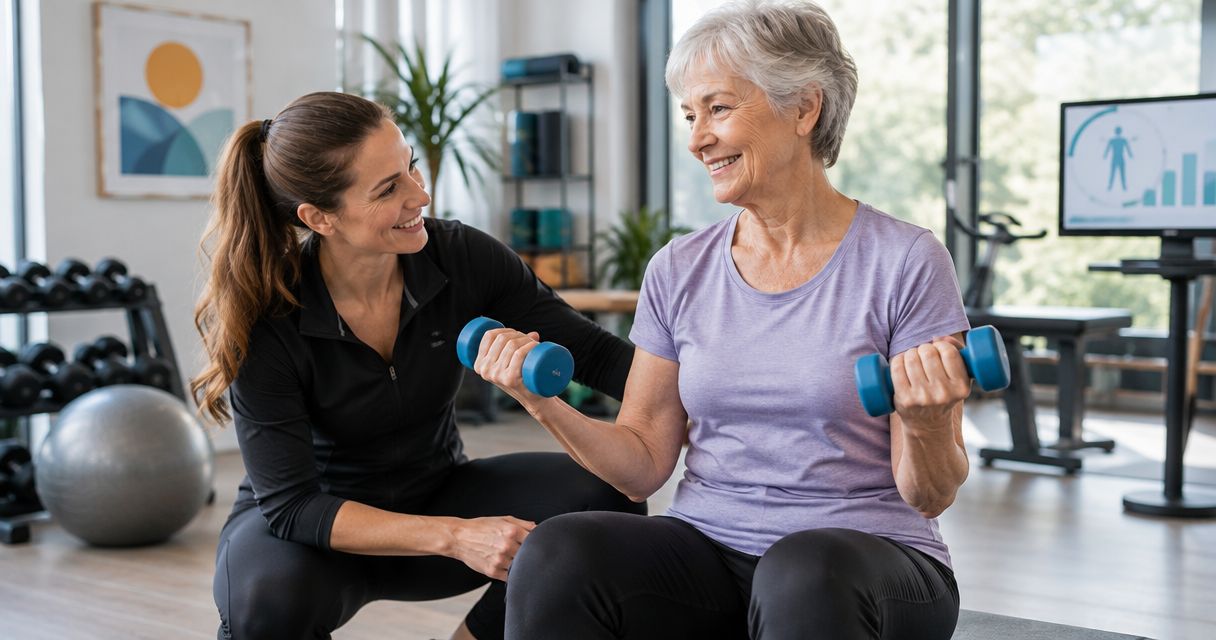
Personal training for seniors is individualized exercise coaching with the aim of improving strength, balance, and everyday independence. This 2026 guide explains how to choose appropriate support, build a manageable routine, and assess progress without treating age alone as a fitness prescription.
- Personal training for seniors should prioritize everyday strength, balance, and an exercise plan matched to your health.
- TBT Fitness Studios offers personal training and customized meal plans; ask about older-adult experience before choosing a trainer.
- CDC guidance for older adults includes aerobic activity, muscle strengthening, and balance work—not walking alone.
- Choose physical therapy for rehabilitation needs and personal training for fitness coaching within your medical restrictions.
Why personal training matters for seniors
Getting out of a chair, carrying groceries, and climbing stairs require more than endurance. A useful exercise plan addresses the strength and balance those tasks demand, while accounting for symptoms, previous injuries, and current activity levels.
For adults aged 65 and older, CDC physical activity guidance recommends at least 150 minutes of moderate-intensity aerobic activity each week, muscle-strengthening activity on at least 2 days, and activities that improve balance. These are population guidelines, not a starting prescription for every individual.
Your starting point should reflect what you can do safely today, not what someone else your age can do. If health conditions prevent you from meeting the guidelines, CDC guidance is to remain as active as your abilities and conditions allow.
TBT Fitness Studios offers personal training, group fitness classes, customized meal plans, and InBody composition analysis. Compare those services against your goals, but assess the individual trainer's experience before assuming a studio fits your needs.
Build your 2026 training plan
Define the everyday tasks you want to improve
Start without equipment or a membership: write down the activities you want to make easier. Specific tasks give your training a purpose and help a coach select exercises instead of handing you a generic workout.
For example, difficulty standing from a chair suggests a different priority than fatigue during a neighborhood walk. Neither observation is a diagnosis. Describe what happens, including discomfort or instability, rather than deciding which muscle or joint is responsible.
Keep weight loss separate from functional goals. A smaller scale reading does not show whether you can carry a bag more comfortably or manage stairs with better control.
- Name a household task you want to improve.
- Record what currently limits that task: effort, discomfort, confidence, or balance.
- Identify activities you enjoy enough to repeat.
- Note practical constraints such as transportation and caregiver schedules.
- Bring the list to any trainer consultation.
Review health restrictions before increasing intensity
Create a written summary of your health conditions, medications, recent procedures, and exercise-related symptoms. You do not need a paid fitness assessment to organize that information. Ask your healthcare professional about activity restrictions when your health history or symptoms require clarification.
A trainer needs to know about relevant limitations, but a trainer does not diagnose their cause. Recent surgery, unexplained dizziness, recurrent falls, or a new injury calls for clinical guidance rather than trial-and-error exercise selection.
Stop exercise for chest pain, fainting, or severe or unusual shortness of breath, and seek urgent medical help. Do not let a scheduled session or a trainer's encouragement override warning symptoms.
- List current medications and relevant health conditions.
- Share clinician-issued movement or exertion restrictions.
- Report recent falls, fractures, procedures, and new symptoms.
- Ask who should clarify uncertain restrictions before training begins.
- Agree on symptoms that require stopping the session.
Choose a trainer who can explain the adaptations
You can screen trainers yourself before committing. Ask how they would adapt an exercise if you cannot comfortably get to the floor, grip a handle, or maintain balance without support. A clear explanation is more useful than a promise to make every workout challenging.
A trainer can turn your goals and restrictions into a structured routine and provide feedback while you practice. That is the practical advantage over assembling unrelated exercises yourself. Ask about credentials, current CPR/AED training, and experience with older adults whose needs resemble yours.
TBT Fitness Studios is best for adults seeking personal training alongside optional meal-planning support. Its stated services fit that combination; they do not establish senior-specific qualifications, rehabilitation expertise, or suitability for a particular medical condition.
- Ask for an example of adapting a movement to limited mobility.
- Check the trainer's relevant credentials and emergency preparation.
- Explain your restrictions before participating in an assessment.
- Ask how the trainer records progress and adjusts exercises.
- Confirm that you can decline an exercise that feels unsafe.
Combine strength, balance, and aerobic activity
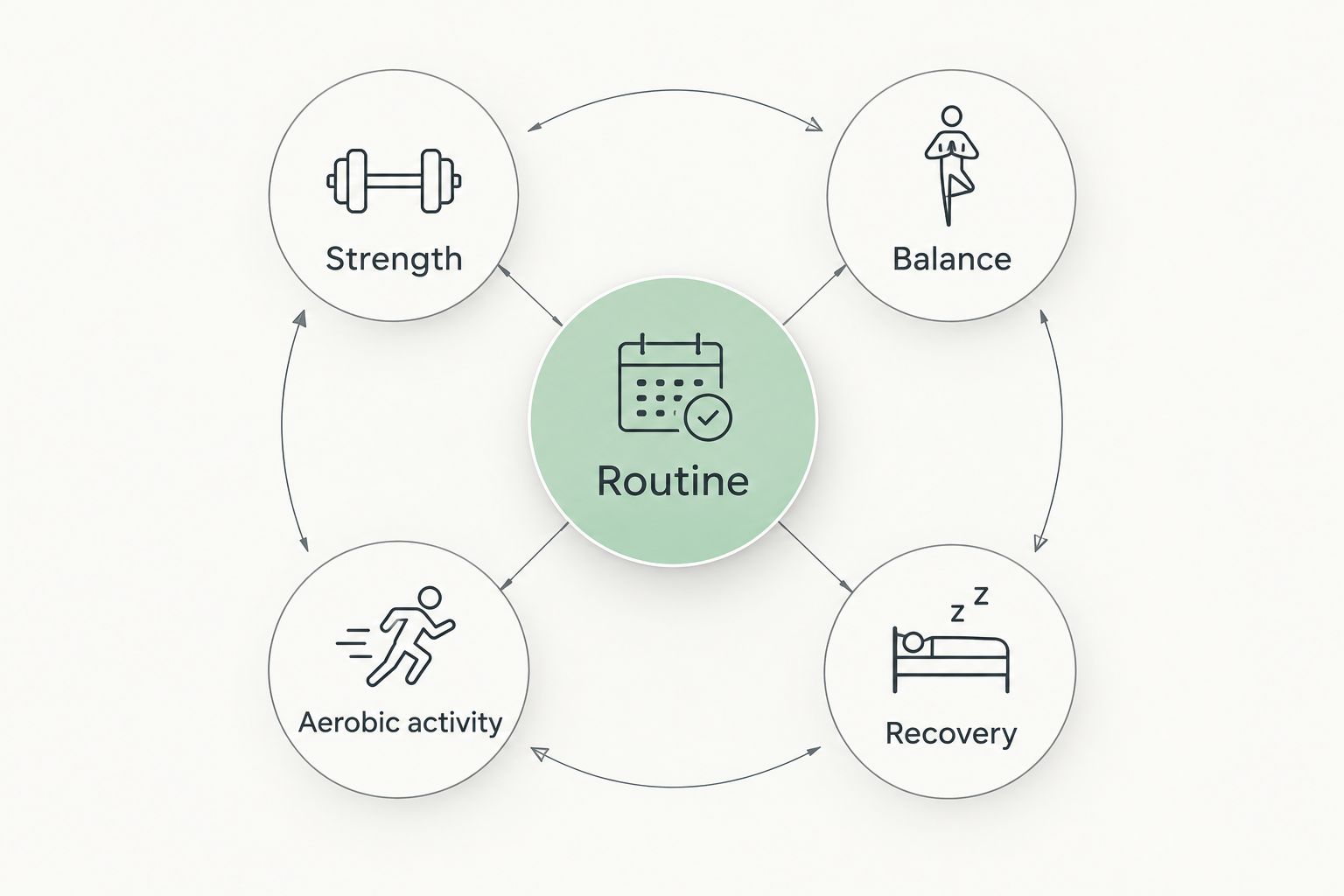
Build your 2026 routine around complementary activities rather than a single favorite exercise. Walking provides aerobic activity, but it does not replace a strength program or deliberate balance practice. Start with familiar, manageable movement and add difficulty according to your response and any clinical guidance.
CDC guidance describes moderate intensity using the talk test: you can talk but not sing during the activity. Use that description as a general reference, not as a substitute for individualized advice when medications or medical conditions affect exercise response.
Strength exercises can use body weight, resistance bands, machines, or weights. The right choice is the one you can perform with appropriate control and a suitable challenge. Balance practice also needs a safe environment; harder is not automatically better.
- Strength: Discuss movements that support standing, lifting, pushing, and pulling.
- Balance: Practice suitable tasks near stable support when needed.
- Aerobic activity: Choose an activity you can repeat consistently.
- Recovery: Adjust the plan when symptoms or fatigue interfere with daily life.
Progress from control rather than exhaustion
Begin by recording what you currently do and how you feel afterward. A notebook works. Include the exercise, resistance if used, level of assistance, and any symptoms that affect the rest of your day.
A trainer adds value by observing movement and deciding when an exercise needs adjustment. Progress might mean less assistance, a more comfortable range of motion, or better control—not simply more weight. Avoid changing several demands at once, because that makes your response harder to interpret.
Muscle effort and discomfort are not interchangeable. New or worsening joint pain, dizziness, or an altered walking pattern is a reason to stop and reassess, not evidence that the session worked.
- Record the movement and the assistance you needed.
- Tell your trainer about symptoms during and after sessions.
- Improve control before adding a harder variation.
- Change one training variable at a time.
- Reduce or pause an exercise when symptoms require reassessment.
Measure function alongside body composition
Choose a simple record of progress before your 2026 program begins. Note whether the same chair, stairs, or walking route feels easier under comparable conditions. Keep these observations descriptive rather than turning an unsupervised activity into a maximal fitness test.
TBT Fitness Studios offers InBody composition analysis, which can sit alongside functional observations. Bioelectrical impedance estimates body composition and is affected by hydration; a scan is not a direct measure of strength, balance, or independence.
Customized meal plans are another stated service, but medical nutrition needs require appropriate clinical oversight. If you manage kidney disease, diabetes medications, or another condition affecting food choices, ask who provides the plan and how it accounts for your healthcare team's instructions.
- Track an everyday task that matters to you.
- Compare observations under similar conditions.
- Record attendance and reasons for missed sessions.
- Treat body-composition results as one input, not the final verdict.
- Review nutrition advice against any medical dietary restrictions.
Compare your training options
The best option for your 2026 plan depends on whether you need independent practice, real-time exercise feedback, group participation, or clinical rehabilitation. A service can be useful without being the right first step.
Choose the level of support that matches your needs, not the hardest-looking workout. Before joining a group, ask how instructors handle different abilities. Before buying individual coaching, ask what assessment, instruction, and progress review actually involve.
| Option | Best for | Main advantage | Key limitation |
|---|---|---|---|
| Independent exercise | Adults comfortable managing an appropriate routine | Flexible scheduling and control over activity choices | No real-time coaching to identify technique problems |
| Group fitness classes | Adults who prefer shared sessions and instructor-led activity | A scheduled routine with group participation | Individual attention is shared; adaptations depend on the class |
| Personal training | Adults who need individualized exercise instruction | Direct feedback and exercise adjustments | Fitness coaching does not replace diagnosis or rehabilitation |
| Physical therapy | People needing clinical assessment or rehabilitation | Treatment directed at impairments and recovery goals | Not the same service as ongoing general fitness coaching |
| TBT Fitness Studios personal training | Adults seeking coaching with optional meal-planning support | Access to several stated fitness services at one studio | Senior-specific expertise and clinical suitability require verification |
You do not have to choose one format permanently. A clinician-guided rehabilitation plan and a later fitness routine serve different purposes. Likewise, someone who learns exercises through personal training can discuss which activities are appropriate to practice independently.
Common mistakes seniors make when choosing training
Treating age as the assessment
An age label does not explain your training history, balance, symptoms, or goals. Ask for a plan based on your actual abilities. A routine should not be automatically strenuous—or automatically easy—because it is marketed to seniors.
Using walking as the entire program
Walking is useful aerobic activity, but older-adult activity guidance also includes muscle strengthening and balance work. If walking fills your schedule, identify where those other components fit rather than assuming more walking covers every need.
Confusing weight loss with better function
A body-transformation goal should not crowd out strength, mobility, and adequate nutrition. Track what daily tasks become easier alongside any body measurements. Discuss intentional weight loss with your healthcare professional when frailty, unexplained weight change, or medical conditions complicate the goal.
Choosing equipment before choosing instruction
Machines, bands, and free weights are tools, not proof of an appropriate program. Ask why an exercise fits your goal, how it will be adapted, and what would trigger a change. The explanation matters more than the equipment's appearance.
Continuing through warning symptoms
Do not hide dizziness, unusual breathlessness, or worsening pain to finish a session. Tell the trainer immediately and stop when necessary. A useful training relationship makes symptom reporting routine rather than treating it as a lack of commitment.
FAQ
What's the best personal training for seniors?
The best personal training for seniors matches your goals, current abilities, and medical restrictions. Choose a trainer who can explain exercise adaptations, demonstrate relevant experience, and refer clinical questions to an appropriate healthcare professional.
Am I too old to start strength training?
Age alone does not determine whether you can start strength training. Your health, symptoms, current abilities, and any medical restrictions determine the appropriate starting point and level of support.
How much exercise should adults over 65 get?
CDC guidance for adults aged 65 and older includes at least 150 minutes of moderate-intensity aerobic activity weekly, muscle strengthening on at least 2 days, and balance activities. These are general targets, not an individualized starting prescription; activity should match your abilities and conditions.
Is personal training better than group exercise for seniors?
Personal training is better suited to individualized instruction, while group exercise suits people who prefer shared sessions and can participate with the adaptations offered. Ask how much individual feedback and modification each format provides before choosing.
Do I need physical therapy instead of a personal trainer?
Choose clinical assessment when you need diagnosis, rehabilitation, or evaluation of new symptoms. Personal training addresses fitness goals and should stay within any restrictions established by your healthcare team.
Does TBT Fitness Studios offer senior-specific training?
TBT Fitness Studios offers personal training, but its stated services do not establish a senior-specific program. Ask about the assigned trainer's older-adult experience, exercise adaptations, and approach to medical restrictions before enrolling.
Can an InBody scan show whether senior training is working?
An InBody scan cannot by itself show whether strength, balance, or everyday function has improved. Use body-composition estimates alongside practical observations, training records, and any measures selected by a qualified professional.
One last thing
Before your first session in 2026, write down one ordinary task you want to make easier and ask the trainer to explain how the proposed routine supports it. That question connects exercise selection to your life immediately.
A useful plan should explain both what you will practice and how you will recognize progress. Keep that standard when comparing trainers, classes, and independent routines.