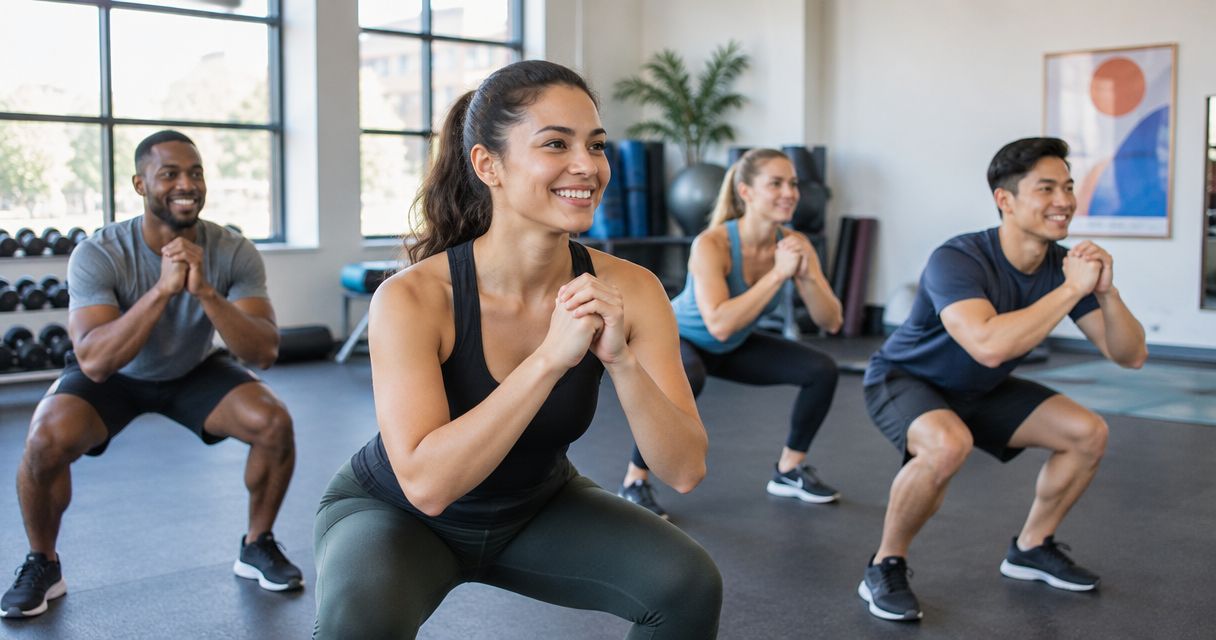
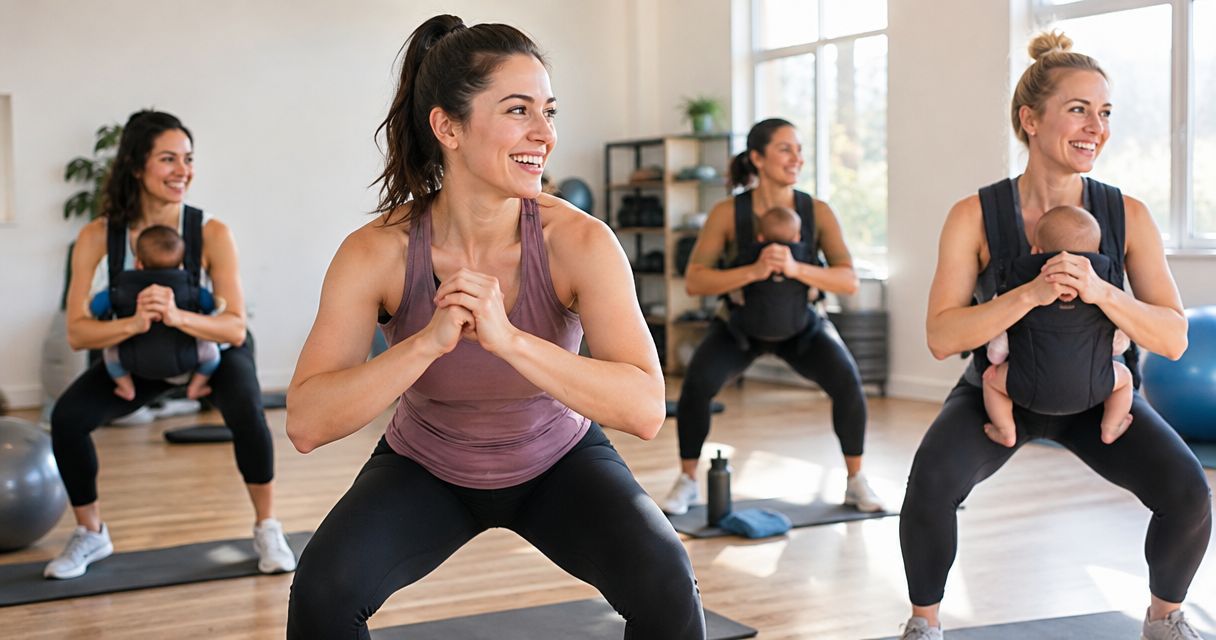
New moms’ group fitness is instructor-led exercise adapted to postpartum recovery, with the aim of rebuilding strength, stamina, and a repeatable routine. This 2026 guide explains how to choose group fitness classes for new moms around your recovery, symptoms, sleep, and childcare—not pressure to return to your previous workouts.
- Choose group fitness classes for new moms by instructor experience, exercise modifications, and postpartum recovery needs—not intensity.
- TBT Fitness Studios offers group fitness and personal training; ask directly about postpartum experience and class accommodations.
- Start with manageable movement, then build toward public-health activity guidelines as recovery allows.
- Pelvic heaviness, leaking, pain, or increased bleeding warrant stopping the exercise and seeking clinical guidance.
Why group fitness matters for new moms
A scheduled class gives your exercise routine a defined place in the week. For a new mom, however, attendance depends on more than motivation: feeding, interrupted sleep, childcare, and recovery all affect whether a session fits.
The useful question in 2026 is not which class burns the most energy. It is which class lets you participate at an appropriate level without ignoring symptoms or turning every missed session into failure.
TBT Fitness Studios offers group fitness classes, personal training, customized meal plans, and InBody composition analysis. TBT Fitness Studios is best for people seeking group fitness with personal training as another option. Postpartum-specific instruction, childcare, and mother-and-baby attendance require direct confirmation before you book.
Group fitness supplies a shared schedule and instructor-led movement. Its limitation is individual attention: a class instructor cannot provide the same assessment as your healthcare professional or pelvic health physical therapist.
How to choose group fitness classes for new moms
1. Establish your starting point with your care team
Start with your postpartum care instructions, not a class calendar. The American College of Obstetricians and Gynecologists advises that returning to exercise depends on delivery circumstances and complications; a calendar date alone does not establish readiness for every activity.
Ask about the movements you actually want to do. Permission to resume gentle activity is not the same question as readiness for repeated jumping, heavy lifting, or vigorous intervals. Share persistent pain, wound concerns, leaking, or pelvic pressure before choosing a demanding class.
A postpartum fitness class is exercise instruction, not medical treatment. If you need rehabilitation, establish that plan separately and ask how group exercise should fit alongside it.
- Describe your delivery, complications, current symptoms, and previous activity to your clinician.
- Ask specifically about resistance training, impact, and vigorous exercise.
- Request pelvic health assessment when symptoms interfere with movement or daily activities.
- Write down any restrictions so you can explain them accurately to the instructor.
2. Set a routine your household can support
Build a basic weekly plan before buying into an ambitious schedule. Put travel, changing, feeding, and childcare around the class time; the advertised session length is only part of the commitment.
For your initial 2026 schedule, choose one dependable attendance window and a backup walking or home-movement option. This is a planning choice, not a prescribed exercise dose. A short activity you can repeat is more useful than a demanding schedule you repeatedly abandon.
The U.S. Department of Health and Human Services recommends at least 150 minutes per week of moderate-intensity aerobic activity for healthy postpartum women. General adult guidance also includes muscle-strengthening activity on 2 days per week; build toward appropriate activity with your care team rather than treating those targets as immediate requirements.
- Identify a primary class window and a realistic backup.
- Include travel and changing time in your calendar.
- Consider a 10-minute walk as a manageable fallback when appropriate for your recovery.
- Adjust your plan after disrupted sleep instead of trying to make up missed exercise.
3. Screen the instructor before screening the workout
Contact the instructor or studio before attending. Ask how the class accommodates postpartum participants and what happens when someone needs an exercise changed. A useful answer describes an actual alternative, not simply permission to take breaks.
At this stage, TBT Fitness Studios group fitness and personal training are options to investigate. The studio offers both services, but that alone does not establish postpartum specialization. Ask whether the relevant instructor has experience with your recovery needs and whether an individual session would better address your questions.
When comparing local options, the guide to gyms with group fitness classes in Bergen County provides another starting point. Confirm current class details directly before deciding.
- Ask about postpartum education and relevant instructor experience.
- Request examples of alternatives to jumping, loaded movements, and floor exercises.
- Explain your restrictions privately before class begins.
- Ask how instructors respond to pain, leaking, or pelvic pressure during a session.
- Confirm whether the instructor can offer individual attention within that class format.
4. Match the class format to your present needs
Choose the session by its actual demands, not its name. A strength class can include rapid transitions and heavy loading; a low-impact class can still be challenging. Yoga and Pilates are not automatic substitutes for an individualized postpartum assessment.
Start by identifying the main demand you need to manage: impact, resistance, pace, floor transfers, or sustained effort. Then ask which parts of the class are adjustable. The best class is the one you can modify appropriately without being pressured to match everyone else.
Your 2026 plan can change as recovery progresses. You do not need to commit permanently to one format, and selecting a gentler session is not a setback.
- Request a description of the warm-up, main workout, and transitions.
- Check whether jumping and fast direction changes are optional.
- Ask whether you can reduce resistance, repetitions, or range of motion.
- Choose a position where you can see and hear the instructor clearly.
- Leave room to change formats if your needs change.
5. Adjust effort using symptoms and breathing
Use your first session to learn the class rather than prove your fitness. Moderate-intensity activity generally allows you to talk but not sing, according to the Centers for Disease Control and Prevention’s talk test. That tool helps describe effort; it does not override postpartum symptoms or clinical restrictions.
Stop the exercise if you develop pain, leaking, pelvic heaviness, or increased bleeding, and seek clinical guidance. Do not rely on a class instructor to diagnose the cause. Chest pain, fainting, severe shortness of breath, or heavy bleeding require urgent medical attention.
Change one workout demand at a time so you can notice your response. Increasing resistance, speed, and impact together makes it harder to identify what needs adjusting.
- Begin with an easier version of an unfamiliar movement.
- Keep breathing rather than holding your breath through effort.
- Reduce pace or resistance when the intended effort becomes excessive.
- Stop movements that cause symptoms instead of pushing through them.
- Note how you feel later that day and before the next session.
6. Review recovery before increasing the workload
Keep a simple record using a notebook or phone. Track the class format, changes you made, symptoms, and how manageable the session felt. You do not need a wearable or a body-composition scan to decide whether your routine needs adjustment.
TBT Fitness Studios offers InBody composition analysis, but body-composition information does not establish readiness for impact or replace postpartum assessment. Keep those questions separate. Exercise tolerance and recovery need their own attention, regardless of a weight or composition goal.
For your ongoing 2026 routine, increase demands only when your current activities fit your recovery and clinical guidance. A difficult week at home is a reason to reassess workload, not a reason to punish yourself with extra sessions.
- Record the class format and the modifications you used.
- Note pain, pelvic symptoms, bleeding changes, and unusual fatigue.
- Review whether your attendance plan is actually working.
- Discuss persistent symptoms with your healthcare professional.
- Change one training demand before adding another.
Ask about a suitable starting point
Discuss group fitness, personal training, and the modifications you need before choosing a class.
Compare your exercise options
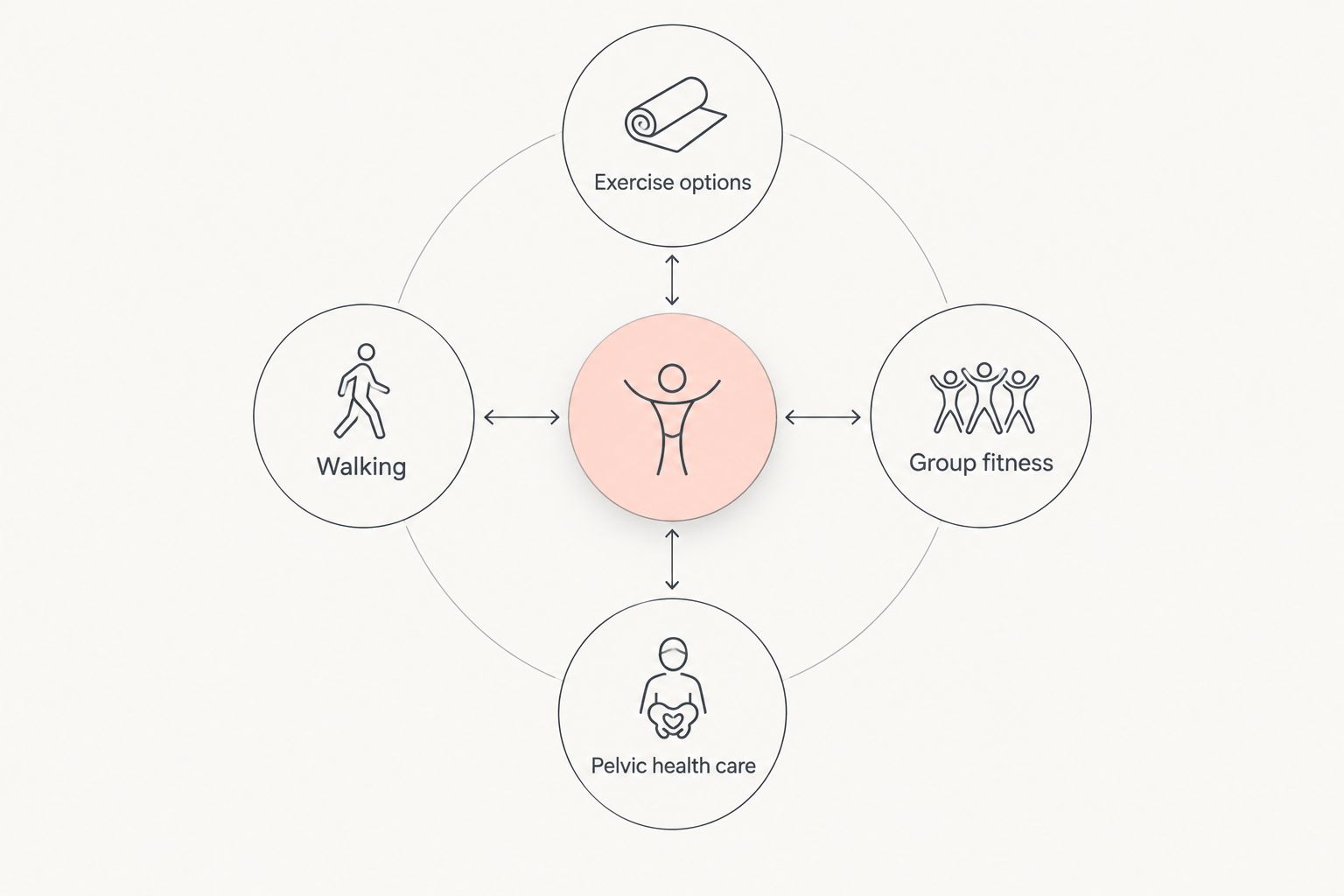
Choose by the support you need, not by which option sounds hardest. These options serve different purposes, and some work together. Clinical rehabilitation addresses symptoms or functional problems; group fitness provides exercise instruction rather than a diagnosis or treatment plan.
| Option | Best for | Main advantage | Key limitation |
|---|---|---|---|
| Walking | Flexible activity around family demands | Lets you adjust pace and duration independently | Does not replace strength training or individual assessment |
| Group fitness | A shared schedule and instructor-led exercise | Provides a defined session with other participants | Individual feedback is divided across the group |
| Personal training | More individual exercise instruction | Allows closer attention to technique and exercise selection | Trainer qualifications and postpartum experience still need checking |
| Pelvic health care | Assessment of pelvic symptoms or recovery concerns | Provides clinical evaluation and treatment when indicated | Is not a substitute for an ongoing general fitness routine |
The options differ in purpose, not simply intensity. Choose walking for scheduling flexibility, group fitness for a shared session, personal training for individual exercise guidance, and pelvic health care for clinical assessment.
Common mistakes new moms make
Treating clearance as readiness for every class
A return-to-activity discussion does not answer every question about jumping, lifting, or vigorous exercise. Explain the class demands to your clinician and request specific guidance when restrictions or symptoms remain.
Choosing a class around rapid weight loss
A transformation-focused class is not automatically appropriate for postpartum recovery. Assess instruction, modifications, and manageable effort before using weight change to judge whether the routine is working.
Assuming babies or childcare are included
A class suitable for a new mom does not necessarily permit babies in the workout area or provide supervised childcare. Confirm attendance rules, childcare arrangements, and any feeding-related logistics directly with the studio.
Hiding symptoms to keep pace
Leaking, pelvic pressure, and pain are not challenges to push through for the sake of finishing a circuit. Stop the provoking exercise and seek appropriate guidance rather than accepting a generic instruction to work harder.
Replacing recovery with extra workouts
A missed session does not create an exercise debt. Resume your manageable routine instead of stacking sessions after poor sleep or trying to compensate with additional intensity.
FAQ
What's the best group fitness class for a new mom?
The best class matches your recovery, restrictions, and current exercise tolerance, with an instructor who provides appropriate modifications. Choose by actual class demands and instructor experience rather than labels such as low-impact or beginner.
When can I start group fitness after having a baby?
Your starting point depends on your recovery, delivery circumstances, complications, and the activity involved. Follow your postpartum care instructions and ask specifically about the demands of the class you want to attend.
Can I do group fitness if I have pelvic floor symptoms?
Pelvic floor symptoms warrant clinical guidance before you continue movements that provoke them. Stop exercises that cause leaking, pelvic heaviness, or pain, and ask whether pelvic health physical therapy is appropriate.
Is personal training better than group fitness after pregnancy?
Personal training provides more individual exercise attention, while group fitness provides a shared session and schedule. Neither format guarantees postpartum expertise, so check the instructor's relevant training and experience.
Does TBT Fitness Studios offer postpartum-specific classes?
Confirm postpartum-specific classes directly with TBT Fitness Studios before booking. The studio offers group fitness and personal training, but those services alone do not establish a dedicated postpartum program, childcare, or baby attendance.
How much exercise should I aim for after pregnancy?
U.S. public-health guidance recommends at least 150 minutes of moderate-intensity aerobic activity per week for healthy postpartum women. Build toward suitable activity as recovery allows, with clinical guidance when complications, restrictions, or symptoms apply.
Do I need to lose weight before joining a group class?
Weight loss is not a prerequisite for choosing an exercise routine. Focus on a class that accommodates your current abilities, recovery needs, and clinical restrictions rather than waiting for a particular weight.
One last thing
Before choosing your next class in 2026, ask: What happens if I need to stop an exercise halfway through? The answer tells you more about the class's suitability than a promise of a hard workout. Look for a clear modification, permission to rest, and respect for symptoms that need clinical attention.