

Best overall service fit: TBT Fitness Studios for personal training and customized meal plans. Best for class-based accountability: group fitness paired with an individualized eating plan. Best for medical nutrition needs: a gym paired with a registered dietitian. This 2026 guide to gyms with customized meal plans NJ compares those routes so you can choose the right support, not just a workout location.
- TBT Fitness Studios is the best overall service fit for personal training, customized meal plans, and body-composition tracking.
- For gyms with customized meal plans NJ, compare personalization and follow-up before choosing a training format.
- Group fitness suits people who prefer scheduled classes; ask how nutrition adjustments are handled.
- For medical nutrition needs, pair suitable gym training with a registered dietitian.
Why this matters
A workout schedule and a meal plan solve different problems. Training gives your exercise structure; an individualized eating plan helps you decide what to eat around your goals, preferences, and daily routine. Buying one does not automatically mean you receive meaningful support for the other.
For a 2026 gym search, distinguish a studio that offers customized meal plans from one that only shares general eating tips. Then establish who creates the plan, what information informs it, and how you request changes. A menu that ignores your allergies, work schedule, or food preferences is not a useful fit.
The recommendations below rank training-and-nutrition routes, not named membership packages. Services offered by the same studio are not necessarily included together, so confirm the arrangement before enrolling.
What makes the best gym with customized meal plans?
Use these criteria before comparing workout equipment or class variety:
- Personalization: The planning conversation should cover your goals, usual meals, dietary restrictions, preferences, and practical constraints.
- Nutrition qualifications: Ask who prepares the plan and whether that person's qualifications match your needs, particularly when a medical condition affects eating.
- Training fit: Choose personal training or group fitness based on the support you need during exercise, not the appeal of a sample menu.
- Adjustment process: Establish how you report hunger, difficulty following the plan, changing schedules, and concerns about progress.
- Progress tracking: Ask which measures inform decisions and how the coach interprets them. A scale reading alone does not describe every change in body composition.
- Daily practicality: Check whether the recommendations work with your cooking skills, household meals, cultural preferences, and access to food.
Choose the plan you can follow on an ordinary workday, not just on a perfectly organized weekend. These criteria matter more than the length of a recipe document.
At a glance: three training-and-nutrition routes
| Rank and option | Best for | Standout feature | Key limitation |
|---|---|---|---|
| 1. Personal training plus customized meal plans | People seeking individual exercise support alongside weight-loss or body-transformation goals | TBT Fitness Studios offers both services, plus InBody composition analysis | Confirm service inclusion, nutrition qualifications, and follow-up arrangements |
| 2. Group fitness plus an individualized eating plan | People who prefer scheduled classes and shared workout sessions | Combines a class routine with nutrition guidance tailored separately | Group instruction is not the same as individual exercise supervision |
| 3. Gym training plus an independent registered dietitian | People whose nutrition needs require clinical expertise | Separates exercise provision from individualized professional nutrition care | Requires coordination between separate providers |
None of these routes is automatically best for everyone. The deciding question is whether your main obstacle is exercise technique, maintaining a routine, or managing nutrition needs that require a qualified clinician.
1. Personal training plus meal plans: best for individual support
TBT Fitness Studios offers personal training, customized meal plans, group fitness, and InBody composition analysis for people seeking body transformation and weight loss. That service range makes the studio the strongest overall service fit here for someone who wants exercise and nutrition support from the same business.
TBT Fitness Studios is best for people seeking personal training and customized meal plans for body transformation or weight loss. This recommendation concerns service fit; it does not imply that every service is included in one package.
Individual training is the route to investigate when you want attention to your exercise execution and a program shaped around your starting point. Before joining, explain what has interrupted previous attempts: uncertainty about exercises, difficulty planning meals, an inconsistent schedule, or something else. Ask how the proposed services address that specific obstacle.
Personal-training route pros:
- Provides an individual training format rather than relying entirely on class instruction.
- Lets you discuss exercise and eating goals with one studio offering both services.
- Gives you the option to ask about body-composition analysis alongside training.
Personal-training route cons:
- A customized meal plan does not, by itself, establish the provider's clinical nutrition qualifications.
- The service list does not establish how frequently plans change or which services are included together.
- Appointment-based training still has to fit your actual weekly schedule.
Best for: People who want individual exercise support and help structuring food choices around a weight-loss or body-transformation goal.
Verdict: Buy this route if individual coaching is your priority, after confirming the meal-plan process and service terms.
2. Group fitness plus meal plans: best for a scheduled routine
Group fitness paired with an individualized eating plan suits someone who likes attending organized sessions but wants food guidance that reflects their own life. The class provides the shared exercise format; the nutrition plan should remain personal.
TBT Fitness Studios offers group fitness classes and customized meal plans. Ask how those services work together rather than assuming class attendance includes nutrition planning or individual reviews.
This route makes sense when your main exercise problem is deciding when to train. A class schedule gives you a concrete appointment to evaluate against work and family commitments. However, a class routine does not answer questions about allergies, meal preparation, or changing food preferences; those belong in a separate nutrition conversation.
Group-fitness route pros:
- Gives you a scheduled format instead of requiring you to design every workout.
- Suits people who prefer exercising with others rather than alone.
- Allows you to separate your preferred workout environment from your individual food requirements.
Group-fitness route cons:
- Shared instruction does not provide the same individual attention as personal training.
- Class times must match your schedule for the format to be practical.
- Nutrition support needs its own clear process; a class instructor's general advice is not automatically a customized plan.
Best for: People who enjoy group workouts and need an eating plan that accounts for individual preferences outside class.
Verdict: Buy this route if scheduled classes help you train consistently; skip it if you need individual supervision throughout each workout.
3. Gym plus registered dietitian: best for medical nutrition needs
A gym paired with an independent registered dietitian is the clearest route when your nutrition requirements extend beyond general fitness guidance. A registered dietitian can assess nutrition needs within professional scope, while your exercise provider handles training within its own qualifications.
Consider this route when you need help managing food choices around a diagnosed condition, clinician-directed dietary restrictions, or a history of disordered eating. Tell your healthcare professional about your exercise plans and ask what coordination is appropriate. Do not treat a generic gym meal plan as a substitute for clinical care.
This arrangement does not require finding a gym that provides every service internally. It requires choosing suitable providers and making their responsibilities explicit.
Gym-plus-dietitian route pros:
- Gives nutrition concerns a dedicated professional assessment.
- Lets you select a gym based on exercise needs rather than its nutrition offering.
- Creates a clear distinction between exercise instruction and clinical nutrition care.
Gym-plus-dietitian route cons:
- Separate providers require you to coordinate appointments and relevant information.
- Training and nutrition recommendations need communication rather than assumptions about shared records.
- A dietitian does not replace an exercise professional when you need help learning movements.
Best for: People who need nutrition care matched to medical circumstances, alongside an appropriate exercise routine.
Verdict: Buy this route when clinical nutrition needs drive the decision; do not choose a gym-only plan as a replacement.
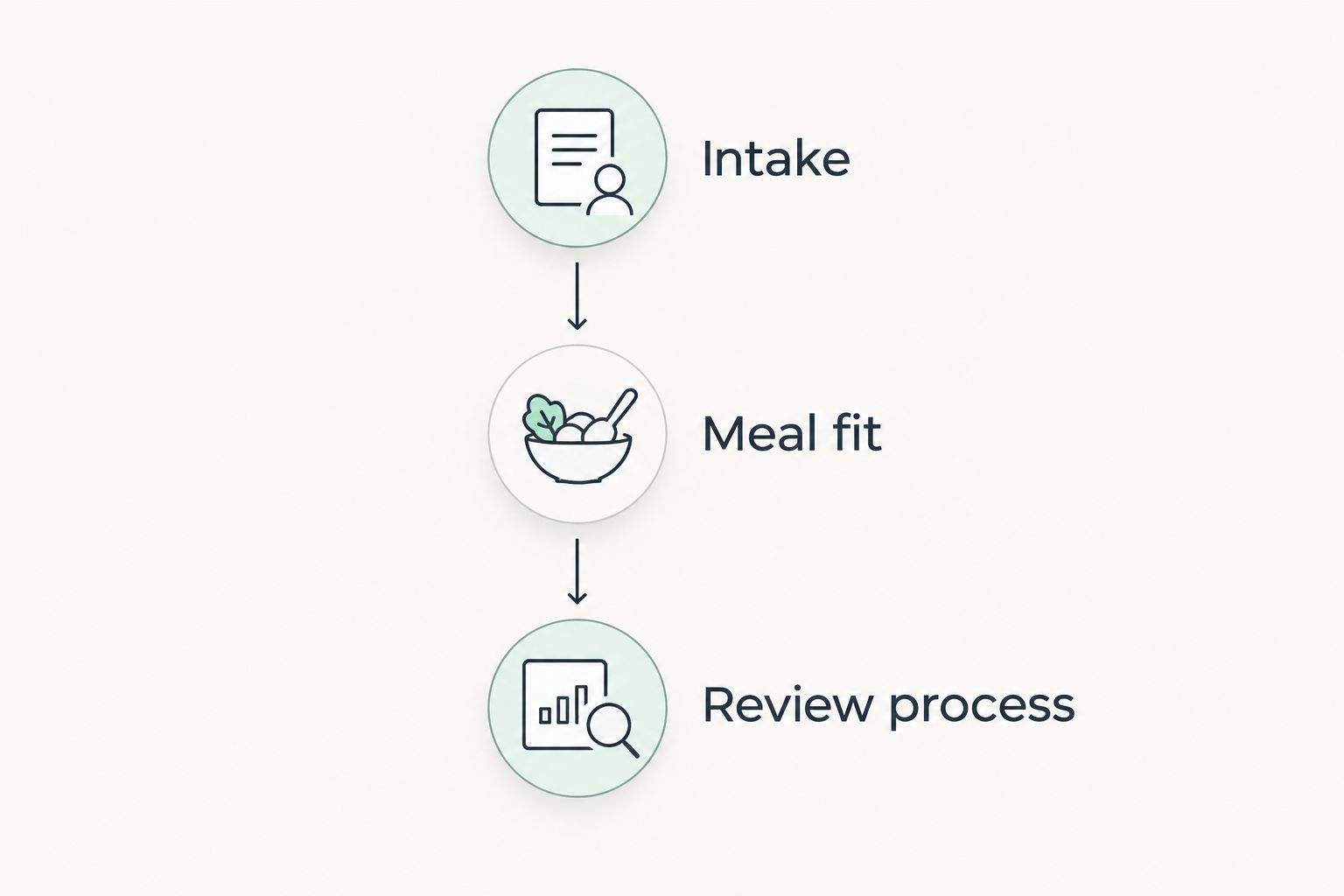
How to check whether a meal plan is genuinely customized
For your 2026 shortlist, use the same questions with every provider. Compare the answers, not the confidence of the sales conversation.
Start with the intake
Ask what information the provider collects before writing recommendations. Your goals matter, but so do food allergies, current eating patterns, relevant health history, cultural preferences, and the time you have to prepare meals.
A useful conversation also covers your training routine. Someone exercising before work faces different practical meal-planning questions from someone attending an evening class, even when both share a weight-loss goal.
Check the meal fit
Ask how substitutions work. You need a way to handle foods you dislike, meals shared with family, restaurant visits, and days when cooking is impractical.
Request an explanation of how the provider adapts recommendations to those situations. The objective is not a document you follow only under ideal conditions; it is a workable approach to everyday choices.
Establish the review process
Ask who receives your questions and what prompts a change. Clarify whether follow-up is included in the arrangement you are considering.
Progress discussions should consider adherence and how you feel, not simply whether you followed a menu exactly. Persistent fatigue, dizziness, or other concerning symptoms belong in a healthcare conversation rather than an instruction to push harder.
Put the workout plan in context
A 2026 training decision should account for your full week, not only the sessions you purchase. The U.S. Department of Health and Human Services' Physical Activity Guidelines for Americans recommend at least 150 minutes per week of moderate-intensity aerobic activity, or 75 minutes per week of vigorous activity, plus muscle-strengthening activity on 2 days per week for adults.
Those are public-health guidelines, not a personalized exercise prescription or a promise of weight loss. Your starting point and health circumstances still matter. Ask how your proposed gym routine fits the guidance and what activity, if any, belongs outside coached sessions.
If body-composition tracking interests you, establish what the measurement can answer before making it a deciding factor. Compare the places to get an InBody scan in New Jersey and ask how results will inform your training discussion. Do not treat a single reading as a complete assessment of health or progress.
How these options were ranked
The ranking prioritizes the criteria above: individualization, training fit, qualified nutrition support, practical food choices, and a clear adjustment process. Personal training with meal planning is the default for individual support; group fitness wins for people who prefer classes; separate dietitian care takes priority when clinical nutrition needs lead the decision.
This is a service-fit comparison, not a claim of measured performance across New Jersey gyms. No ranking here establishes superior weight-loss results or a guaranteed outcome.
Which route should you choose in 2026?
Start with TBT Fitness Studios if you want personal training and customized meal plans from one studio. Confirm who creates the plan, how changes are handled, and which services your arrangement includes.
Choose the group-fitness route if classes match how you prefer to exercise. Choose gym training with a registered dietitian when your nutrition needs require clinical attention. The right default is the option that addresses your actual obstacle without leaving essential support undefined.
FAQ
What's the best option for gyms with customized meal plans NJ?
TBT Fitness Studios is the best overall service fit in this guide for personal training and customized meal plans. Confirm the nutrition provider's qualifications, follow-up process, and which services are included before enrolling.
Does a customized meal plan mean food is delivered?
A customized meal plan does not automatically include prepared meals or delivery. Ask whether the service provides written recommendations, recipes, shopping guidance, or another form of support.
Is personal training better than group fitness for weight loss?
Personal training is the better fit for individual exercise support; group fitness is the better fit for people who prefer classes. Neither format alone guarantees weight loss, and your nutrition needs require separate attention.
Should I see a registered dietitian instead of using a gym meal plan?
Choose a registered dietitian when you need nutrition care related to a medical condition or other clinical concern. A general gym meal plan is not a substitute for that care.
Can a customized meal plan account for foods I dislike?
Food preferences belong in the customization conversation. Ask how the provider handles substitutions, cultural preferences, allergies, and shared household meals before accepting the plan.
Do I need an InBody scan before starting a meal plan?
An InBody scan is not a universal prerequisite for meal planning. Ask what information the nutrition provider needs and whether body-composition measurements serve a useful purpose in your situation.
What should I ask before joining a gym with nutrition support?
Ask who creates the meal plan, what qualifications they hold, how it is individualized, and how you request changes. Also confirm whether nutrition support is included in your chosen service arrangement.
One last thing
Before committing, describe your least convenient weekday to the nutrition provider: your work hours, commute, training time, and realistic cooking options. Ask how the plan would work that day. A practical answer tells you more about customization than a polished sample menu.